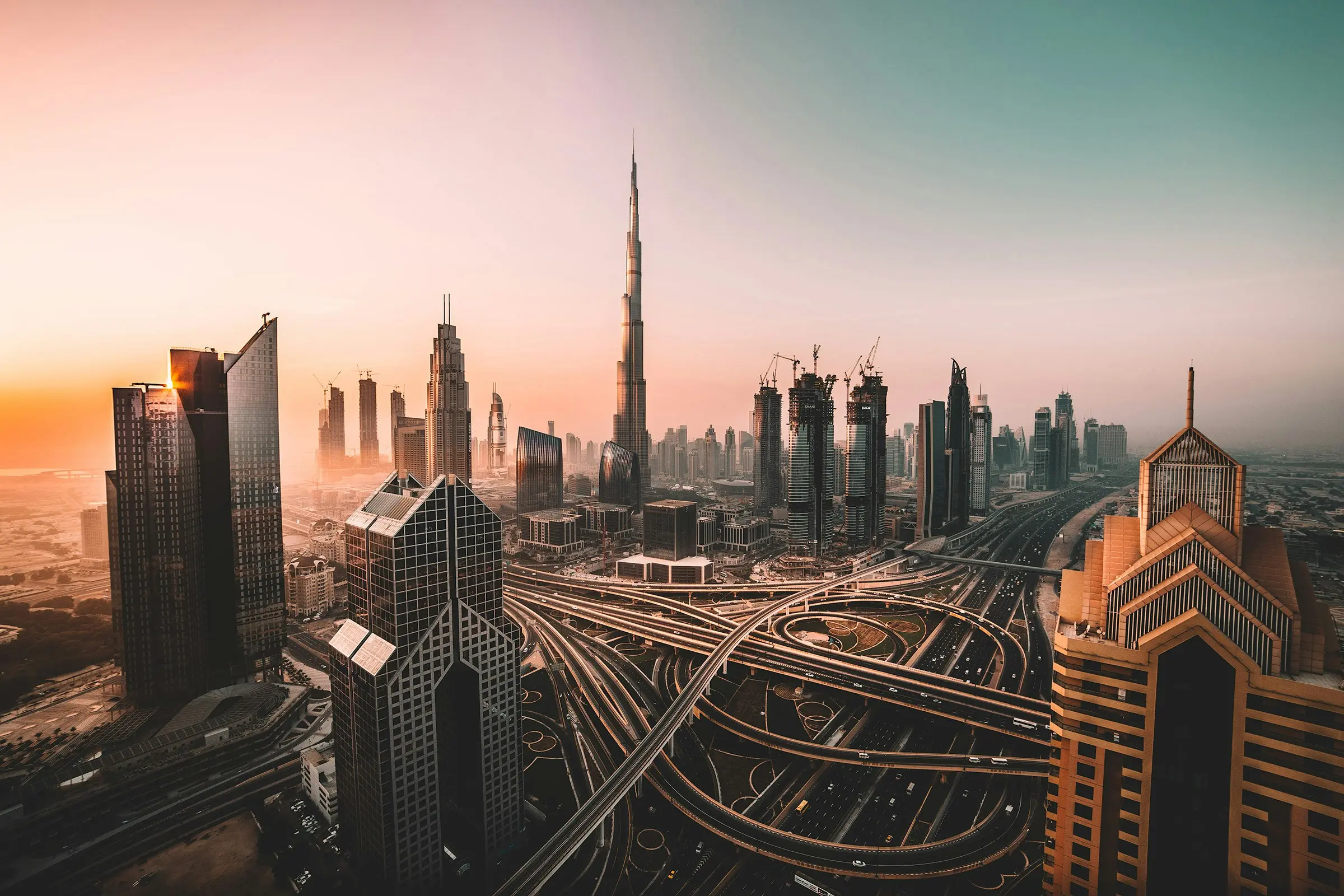
Dubai Property for Chinese Investors 2026: Complete Buying Guide
A comprehensive guide for Chinese nationals investing in Dubai real estate, covering Golden Visa eligibility, popular communities, payment structures, and practical tips for navigating the purchase process from China.
Key Takeaways
- Dubai offers Chinese investors freehold property ownership with no property tax, making it one of the most investor-friendly markets globally
- The Golden Visa program grants 10-year residency for property investments of AED 2 million or more, a major draw for Chinese buyers
- Popular communities for Chinese investors include Dubai Marina, Downtown Dubai, JVC, and Business Bay, each offering different price points and lifestyles
- Chinese investors can purchase remotely using Power of Attorney, with many developers offering virtual tours and online booking
- Understanding AED-RMB exchange dynamics, Chinese capital controls, and DLD regulations is essential before investing
Chinese investors have become one of the most powerful forces in Dubai's real estate market, and the momentum is accelerating. Chinese buyers now rank among the top three foreign nationalities purchasing property in the emirate, with investment volumes surging 22% year-on-year in early 2026 according to Dubai Land Department data. For Chinese nationals weighing overseas property investment, Dubai offers a combination that is increasingly difficult to ignore: zero property tax, a currency pegged to the US dollar, freehold ownership in designated areas, and a Golden Visa programme that grants long-term residency for property purchases of AED 2 million or more.
This guide covers everything a Chinese investor needs to know about buying Dubai property in 2026 — from navigating China's capital controls and choosing the right payment method, to selecting the best areas, understanding the legal framework, and completing the purchase step by step.
Key Takeaways
- Chinese investors are among the top 3 foreign buyer segments in Dubai real estate, with investment surging 22% year-on-year in early 2026
- Capital controls can be navigated legally through Hong Kong accounts and developer payment plans
- Dubai offers zero property tax and 6–10% rental yields versus 1–3% in Tier 1 Chinese cities
- AED 2M+ property purchase qualifies for a 5-year Golden Visa with family sponsorship
- Freehold ownership in designated areas gives Chinese buyers full property rights — no local sponsor required
Why Chinese Investors Are Choosing Dubai in 2026
Several structural factors are driving Chinese capital into Dubai property at record levels. Understanding these drivers is essential for any investor evaluating the opportunity.
Zero property tax. Unlike almost every major Chinese city and most Western markets, Dubai levies no annual property tax, no capital gains tax on property sales, and no rental income tax. For a Chinese investor accustomed to holding costs eating into returns, this is transformative. A property generating AED 80,000 in annual rent delivers AED 80,000 — not AED 80,000 minus 20–40% in income tax.
Currency stability through the AED-USD peg. The UAE dirham is pegged to the US dollar at AED 3.6725 per USD, a rate that has held since 1997. For Chinese investors, this provides a hedge against yuan depreciation. The renminbi has faced downward pressure against the dollar in recent years, and holding assets in a dollar-pegged currency preserves purchasing power internationally. When you buy property in Dubai, you are effectively holding a dollar-denominated asset without needing to convert directly into USD.
Golden Visa residency. A property investment of AED 2 million or more qualifies the buyer for a 5-year Golden Visa, extendable for similar periods. This grants the right to live, work, and study in the UAE, sponsor family members, and enter and exit the country freely — with no national sponsor required. For Chinese families seeking a second residency or a base for international business, this is a significant incentive that few other property markets offer at this price point.
Safe haven from capital controls. China's State Administration of Foreign Exchange (SAFE) restricts individuals to a USD 50,000 annual foreign exchange quota. Dubai property provides a legal, tangible asset outside the mainland financial system — a critical consideration for wealth preservation and diversification.
Cultural and business connectivity. Direct flights between major Chinese cities and Dubai take 7–9 hours. The UAE has visa-free or visa-on-arrival arrangements for Chinese nationals. Dubai's Chinese business community is well-established, with Chinese-language services, restaurants, and professional networks readily available.
How Chinese Capital Controls Affect Dubai Property Purchases
China's foreign exchange regulations are the single biggest practical challenge for Chinese investors buying overseas property. Understanding the rules — and the legal pathways around them — is critical before committing to a purchase.
The SAFE framework. China's State Administration of Foreign Exchange (SAFE) limits each individual to purchasing a maximum of USD 50,000 in foreign currency per calendar year. This quota is personal and cannot be legally transferred between individuals for the purpose of circumventing the limit. The stated purpose of the quota is for legitimate overseas spending — education, tourism, medical expenses — and explicitly excludes overseas property investment.
What this means in practice. A property priced at AED 2,000,000 (approximately USD 545,000) would require roughly 11 years' worth of individual quotas if funded entirely through official channels. Clearly, most Chinese property buyers in Dubai are not using a single individual's annual quota to fund their purchases.
Legal workarounds that Chinese investors use:
-
Hong Kong bank accounts. Hong Kong operates a separate financial system from mainland China under the "One Country, Two Systems" framework. Chinese nationals who hold Hong Kong bank accounts can transfer funds internationally without the USD 50,000 restriction. Opening a Hong Kong account typically requires a visit to Hong Kong, proof of income, and sometimes a minimum deposit (often HKD 1,000,000 or equivalent for premium accounts). Once funds are in a Hong Kong account, international wire transfers to UAE escrow accounts are unrestricted.
-
Company structures. Many Chinese investors route property purchases through Hong Kong-registered or BVI-registered companies. This separates the property asset from the individual's personal foreign exchange quota and can simplify future resale. However, company-owned property may face different mortgage terms and Golden Visa eligibility requirements — professional legal advice is essential.
-
Family member quotas. Some families pool the annual quotas of multiple family members — parents, adult children, spouses — each transferring their legitimate USD 50,000 allocation. This approach must be documented carefully to satisfy both Chinese and UAE anti-money-laundering (AML) requirements. Each transfer should clearly state the source of funds.
-
Mainland China to Hong Kong channels. Several channels exist for moving RMB from mainland China to Hong Kong, including the daily RMB 80,000 remittance limit per person through banks in Shenzhen and other border cities, and the Connect programmes (Stock Connect, Bond Connect, Wealth Management Connect) for qualified investors in the Greater Bay Area.
Important warning. Using unofficial money changers or underground banking networks (commonly called "fei qian" or flying money) to transfer funds out of China is illegal under Chinese law and carries severe penalties, including criminal prosecution. UAE banks also conduct AML checks on incoming transfers, and unexplained fund sources can result in frozen accounts and failed transactions. Always use legitimate banking channels.
Payment Methods for Chinese Buyers
Once funds are positioned outside mainland China's exchange control system, several payment methods are available for completing a Dubai property purchase.
International bank transfer (SWIFT). The most common method for Chinese buyers. Funds are wired from a Hong Kong or offshore bank account to the seller's escrow account in the UAE. Processing time is typically 2–5 business days. UAE banks require proof of source of funds for transfers exceeding AED 55,000, so prepare documentation showing the origin of the money — salary records, business financials, or previous bank statements.
Cryptocurrency. Dubai is one of the most crypto-friendly jurisdictions in the world. Several developers now accept payment in Bitcoin, Ethereum, and USDT for off-plan and ready properties. DAMAC Properties was among the first major developers to accept crypto, and others have followed. The process typically involves converting crypto to AED through a licensed UAE exchange (such as BitOasis or Rain) before settling with the developer. This method can be particularly attractive for Chinese investors who hold crypto assets, as it bypasses traditional banking channels entirely. However, cryptocurrency payments must still comply with UAE AML regulations.
Developer payment plans. This is one of the most accessible options for Chinese buyers. Most Dubai developers offer structured payment plans that spread the cost over 3–7 years, with down payments as low as 10–20%. Common structures include:
- 60/40 plan — 60% during construction, 40% on handover
- 70/30 plan — 70% during construction, 30% on handover
- 80/20 plan — 80% during construction, 20% on handover
- 50/50 post-handover — 50% during construction, 50% over 2–3 years after handover
Payment plans reduce the immediate capital outflow, which helps manage the timing of fund transfers from Hong Kong or offshore accounts. A property priced at AED 2,000,000 on a 60/40 plan requires only AED 1,200,000 during construction — spread across multiple installments — and AED 800,000 at handover.
Escrow-protected payments. All off-plan payments in Dubai must be deposited into DLD-regulated escrow accounts. The developer cannot access these funds until construction milestones are verified by independent project managers. This protects buyers if a developer fails to deliver — a critical safeguard for overseas investors who cannot physically monitor construction progress.
Top Dubai Areas for Chinese Investors
Not all Dubai communities offer the same investment profile. The following five areas are particularly well-suited to Chinese investors based on price accessibility, rental demand, capital appreciation potential, and infrastructure quality.
Business Bay
Business Bay is Dubai's central business district, adjacent to Downtown Dubai and Sheikh Zayed Road. It offers the best price-to-location ratio in the city centre.
- Studio apartments: AED 650,000–950,000 | Yield: 7–8%
- 1-bedroom apartments: AED 1,000,000–1,600,000 | Yield: 6.5–7.5%
- 2-bedroom apartments: AED 1,600,000–2,800,000 | Yield: 5.5–7%
- Price per sq ft: AED 1,500–2,000
- Why Chinese investors choose it: Central location, competitive pricing, strong rental demand from corporate tenants, and excellent connectivity via the Business Bay metro station. Business Bay recorded over 3,900 transactions in Q2 2026, making it one of the most liquid markets in Dubai.
Dubai Marina
Dubai's most iconic waterfront community, with direct beach access, a vibrant promenade, and a mature rental market.
- Studio apartments: AED 750,000–1,100,000 | Yield: 6–7%
- 1-bedroom apartments: AED 1,100,000–1,800,000 | Yield: 5.5–7%
- 2-bedroom apartments: AED 1,800,000–3,200,000 | Yield: 5–6.5%
- Price per sq ft: AED 1,600–2,200
- Why Chinese investors choose it: Brand recognition in China is extremely high — Dubai Marina is often the first community Chinese buyers ask about. Waterfront lifestyle, strong tourism rental demand, and consistent capital appreciation.
Downtown Dubai
Home to the Burj Khalifa, Dubai Mall, and the Dubai Fountain — the ultra-prime core of the city.
- 1-bedroom apartments: AED 1,500,000–2,500,000 | Yield: 5–6%
- 2-bedroom apartments: AED 2,500,000–5,000,000 | Yield: 4.5–5.5%
- Price per sq ft: AED 2,000–3,000
- Why Chinese investors choose it: Prestige factor. Downtown properties carry maximum status in Chinese investor circles. Lower yields are offset by stronger capital appreciation — 8–12% annually in 2025–2026 — and unmatched liquidity for resale.
Jumeirah Village Circle (JVC)
Dubai's most affordable freehold community with some of the highest rental yields in the city.
- Studio apartments: AED 550,000–750,000 | Yield: 7.5–9%
- 1-bedroom apartments: AED 750,000–1,200,000 | Yield: 7–8.5%
- 2-bedroom apartments: AED 1,200,000–1,800,000 | Yield: 6.5–7.5%
- 3-bedroom townhouses: AED 1,800,000–2,600,000 | Yield: 5.5–7%
- Price per sq ft: AED 1,000–1,500
- Why Chinese investors choose it: Lowest entry point in the Dubai freehold market. Exceptional yields. JVC led all Dubai communities in transaction volume in Q2 2026 with over 4,800 transactions. The JVC metro station and expanding retail infrastructure are accelerating capital growth.
Dubai Creek Harbour
Emaar's flagship waterfront master development, positioned as the next-generation Downtown Dubai.
- 1-bedroom apartments: AED 1,050,000–1,660,000 | Yield: 5.6–6.2%
- 2-bedroom apartments: AED 2,390,000–2,680,000 | Yield: 5.6–6.2%
- Price per sq ft: AED 1,600–2,100
- Why Chinese investors choose it: Emaar brand carries strong credibility with Chinese buyers. Off-plan entry from AED 1,050,000 with 80/20 payment plans. The upcoming Dubai Creek Tower — expected to surpass the Burj Khalifa in height — is a major future catalyst for capital appreciation. Blue Line metro station confirmed for 2029.
Golden Visa for Chinese Nationals
The UAE Golden Visa is one of the most compelling reasons for Chinese investors to choose Dubai over other global property markets. Here is how it works for property buyers.
Eligibility threshold. A property purchase of AED 2,000,000 or more qualifies the buyer for a 5-year Golden Visa. This threshold can be met through a single property or a portfolio of properties with a combined value of AED 2,000,000 or more, as confirmed by a Dubai Land Department valuation.
Key benefits for Chinese nationals:
- 5-year residency, renewable for similar periods with no maximum limit
- No national sponsor required — unlike standard UAE residency visas, which require an employer or local sponsor
- Family sponsorship — the visa holder can sponsor a spouse and children under 25
- Work and business rights — Golden Visa holders can work, start businesses, and hold commercial licenses in the UAE
- No minimum stay requirement — unlike some residency programmes, the Golden Visa does not require a minimum number of days in-country per year, though extended absences may trigger review
- Domestic worker sponsorship — up to three domestic workers can be sponsored
Application process. After property registration with the DLD, the Golden Visa application is filed through the Federal Authority for Identity, Citizenship, Customs and Port Security (ICP) or through the Dubai REST app. Processing typically takes 2–4 weeks. Required documents include the title deed, passport copy, medical examination results, and proof of health insurance.
Off-plan properties and the Golden Visa. Buyers of off-plan properties valued at AED 2,000,000 or more can apply for the Golden Visa based on the Oqood registration (the DLD's off-plan registration system), even before the property is completed. This is a significant advantage — you secure residency rights from the moment you register the off-plan contract, not just after handover.
Legal Framework and Ownership Rights
Dubai's property legal framework is well-established and investor-friendly, but there are specific details Chinese buyers must understand.
Freehold areas. Since 2002, Dubai has designated over 60 freehold zones where foreign nationals can purchase property with full ownership rights — identical to those enjoyed by UAE citizens. All five areas recommended in this guide (Business Bay, Dubai Marina, Downtown Dubai, JVC, and Dubai Creek Harbour) are freehold zones. In freehold areas, the owner holds the property and the land permanently, with the right to sell, lease, mortgage, or bequeath without restriction.
Non-freehold areas. Outside designated freehold zones, foreign nationals can only acquire 99-year leasehold rights or use rights, not full ownership. Always confirm that a property is in a freehold area before committing. The DLD website provides a searchable list of all freehold zones.
DLD registration. Every property transaction in Dubai must be registered with the Dubai Land Department. Upon registration, the buyer receives an electronic title deed (e-Title Deed) accessible through the Dubai REST app. Registration involves a 4% transfer fee based on the property value, plus a AED 580 admin fee. This is mandatory and non-negotiable — unregistered transactions are not legally recognized.
Oqood for off-plan properties. When buying an off-plan property, the buyer's rights are registered through the Oqood system — the DLD's electronic registration platform for off-plan contracts. Oqood registration costs 4% of the purchase price and provides legal protection for the buyer during the construction period. Once the property is completed and handed over, the Oqood registration is automatically converted to a full title deed at no additional cost.
RERA regulation. The Real Estate Regulatory Agency (RERA), a division of the DLD, oversees all real estate activities in Dubai. All agents must hold a valid RERA broker license. Developers must deposit buyer payments into DLD-regulated escrow accounts. These protections are particularly important for overseas buyers who cannot visit the property frequently.
Inheritance and wills. For Chinese nationals, UAE inheritance laws can apply by default — which means Sharia-based distribution rules may govern the estate if no will is in place. Chinese investors are strongly advised to register a will with the DLRD (Dubai Courts) or the DIFC Wills Service Centre, which allows non-Muslim foreigners to specify inheritance distribution according to their own national law or personal wishes. Without a registered will, property distribution may not align with the investor's intentions.
Tax Implications for Chinese Investors
Dubai's tax environment is one of its greatest advantages — but Chinese investors must also consider their obligations under Chinese tax law.
Dubai side: zero property tax. Dubai does not levy any of the following:
- Annual property tax
- Capital gains tax on property sales
- Rental income tax
- Stamp duty (the 4% DLD transfer fee is a registration fee, not a tax)
- Wealth tax
- Inheritance tax
This means a property generating AED 100,000 in annual rent delivers AED 100,000 to the owner, and a property sold for AED 500,000 more than the purchase price delivers the full AED 500,000 gain.
China side: tax obligations for PRC tax residents. Chinese nationals who are tax residents of China (living in China for 183 days or more in a calendar year) are subject to Chinese income tax on worldwide income, including overseas rental income. Key points:
- Rental income from Dubai property is taxable in China at progressive rates from 3% to 45%, after allowable deductions for property-related expenses
- Capital gains from selling Dubai property are subject to Chinese individual income tax, typically at 20% on the net gain
- Failure to declare overseas income can result in penalties, interest, and in serious cases, criminal prosecution under Chinese tax law
Double taxation treaty. The UAE and China signed a Double Taxation Avoidance Agreement (DTAA) in 1993. However, this treaty predates many modern provisions and does not fully eliminate double taxation on rental income. Because the UAE does not tax rental income, there is no foreign tax credit available to offset the Chinese tax liability. Chinese investors should consult a cross-border tax advisor to structure their holdings efficiently.
Practical tip. Some Chinese investors hold Dubai property through corporate structures (Hong Kong or BVI companies) rather than in personal names. This can change the tax treatment of rental income and capital gains under Chinese law, but it also adds complexity and cost. Professional advice is essential before choosing a holding structure.
Step-by-Step Buying Process for Chinese Nationals
Here is the complete process for a Chinese national purchasing property in Dubai, from initial research to title deed receipt.
Step 1: Position funds outside mainland China. Transfer RMB to a Hong Kong or offshore bank account before beginning the property search. This is the most time-sensitive step — ensure funds are liquid and available for international wire transfer before committing to any purchase.
Step 2: Research areas and set a budget. Define your investment goal (yield, capital appreciation, or personal use) and identify 2–3 target areas. Factor in the additional costs: 4% DLD transfer fee, 2% agent commission (on secondary market), NOC fee (AED 500–5,000), and trustee office fee (AED 4,000 for properties above AED 500,000). Budget approximately 5–7% above the property price for transaction costs.
Step 3: Engage a RERA-licensed agent. Work only with agents who hold a valid RERA broker card. Verify the card number on the DLD website. A good agent will provide market data, arrange viewings (virtual or in-person), and manage negotiations.
Step 4: Select a property and make an offer. Your agent submits a written offer to the seller. Negotiation is normal — most properties sell within 5–10% of the asking price. For off-plan purchases, pricing is typically non-negotiable, but you can compare payment plans across developers.
Step 5: Sign the Memorandum of Understanding (MOU). This legally binding document sets out the purchase price, payment terms, completion date, and inclusions. The buyer pays a 10% holding deposit into the agent's escrow account at this stage.
Step 6: Transfer funds to UAE escrow. Wire the purchase funds from your Hong Kong or offshore account to the designated escrow account. Prepare source-of-funds documentation — UAE banks require this for incoming transfers. Allow 2–5 business days for SWIFT transfers.
Step 7: Obtain the No Objection Certificate (NOC). The seller's developer issues the NOC, confirming there are no outstanding service charges and the property is clear to transfer. This typically takes 5–7 business days and costs AED 500–5,000.
Step 8: Complete the DLD transfer. Both buyer and seller (or their authorised representatives with power of attorney) attend the DLD Trustee Office to execute the transfer. The 4% transfer fee is paid at this stage. Upon completion, the buyer receives the e-Title Deed via the Dubai REST app. For off-plan purchases, the Oqood registration serves as interim proof of ownership until handover.
Step 9: Apply for the Golden Visa (if eligible). If the property value is AED 2,000,000 or more, submit your Golden Visa application through the ICP portal or Dubai REST app with the title deed, passport, medical exam results, and health insurance proof. Processing takes 2–4 weeks.
Timeline. A typical cash purchase of a ready property takes 14–30 days from MOU signing to title deed receipt. Off-plan purchases can be completed in as little as 3–5 days once funds are in position, as there is no seller-side NOC or existing tenant to manage.
Common Mistakes to Avoid
Chinese investors new to the Dubai market frequently make the following errors. Awareness of these pitfalls can save significant money and stress.
Mistake 1: Not positioning funds before starting the search. Many Chinese buyers begin viewing properties before their funds are accessible outside mainland China. When they find the right property, they cannot transfer the purchase price in time, and the deal falls through — or they lose negotiating leverage because the seller knows they are cash-constrained. Position funds in Hong Kong or an offshore account first, then start shopping.
Mistake 2: Buying in non-freehold areas. Some agents market properties in leasehold or use-right areas without clearly disclosing the ownership structure. Always verify that the property is in a DLD-designated freehold zone. Without freehold ownership, you cannot fully control the asset, and resale value is significantly limited.
Mistake 3: Ignoring Chinese tax obligations. The UAE may not tax your rental income or capital gains, but China will if you are a PRC tax resident. Failure to declare overseas income is a serious offence under Chinese law. Engage a cross-border tax advisor before completing the purchase.
Mistake 4: Not registering a will. Without a registered will in the UAE, Sharia-based inheritance rules may apply to your Dubai property regardless of your nationality or wishes. Register a will with the DIFC Wills Service Centre to ensure your property passes to your intended heirs.
Mistake 5: Overpaying for off-plan without checking developer track record. Not all developers deliver on time or on specification. Before buying off-plan, verify the developer's delivery history through the DLD's project status portal. Stick with established developers — Emaar, Nakheel, DAMAC, Dubai Properties, Meraas, and Sobha have reliable track records. Smaller or unknown developers may offer lower prices but carry higher completion risk.
Mistake 6: Underestimating service charges. Every building in Dubai charges annual service fees for maintenance, facilities management, and common area upkeep. These range from AED 10–15 per sq ft for standard buildings to AED 25–40 per sq ft for premium towers with hotel-style amenities. A 900 sq ft apartment with AED 20/sq ft service charges costs AED 18,000 per year — a direct deduction from your net yield. Always request the most recent service charge statement before purchasing.
Frequently Asked Questions
Can Chinese citizens buy freehold property in Dubai?
Yes. Since 2002, Dubai has allowed foreign nationals of any country to purchase freehold property in designated freehold zones. Chinese citizens have the same ownership rights as any other nationality — full, permanent, and unrestricted ownership of both the property and the land it sits on.
How do I transfer money from China to buy property in Dubai?
The most common legal route is to transfer RMB to a Hong Kong bank account first, then wire the funds internationally to the UAE escrow account. The USD 50,000 annual foreign exchange quota applies to transfers from mainland China, but Hong Kong accounts are not subject to this restriction. Alternative methods include cryptocurrency (accepted by some developers) and structured developer payment plans that spread payments over time.
Is the Golden Visa guaranteed with a property purchase?
The Golden Visa is granted to property owners who hold real estate valued at AED 2,000,000 or more, as confirmed by a DLD property valuation. The visa is not automatic — you must apply through the ICP with supporting documents. Approval is typically straightforward for legitimate purchases, but the visa can be revoked if the property is sold or if the owner fails to maintain the property value threshold.
What is the minimum investment needed to buy property in Dubai as a Chinese investor?
There is no minimum investment threshold for buying property in Dubai — studio apartments in JVC are available from approximately AED 550,000. However, the AED 2,000,000 threshold is significant because it qualifies the buyer for the Golden Visa. Below that amount, you can still buy and own property but will not be eligible for the residency visa.
Do I need to visit Dubai to complete the purchase?
No. The entire transaction can be completed remotely through a power of attorney (POA) issued to a UAE-based lawyer or agent. The POA must be notarised and attested by the UAE embassy in China and the Ministry of Foreign Affairs in the UAE. Several Chinese investors complete purchases without ever visiting Dubai, though an in-person visit is recommended for selecting the right property.
How does Dubai property investment compare to buying in other countries popular with Chinese investors?
Dubai offers several advantages over markets like Australia, Canada, and the UK: zero property and rental income tax (vs. 15–45% effective tax rates), higher rental yields (6–10% vs. 2–5%), a faster and more transparent buying process, and no foreign buyer surcharges or restrictions. The trade-off is that Dubai does not offer a path to citizenship through property investment — the Golden Visa provides residency, not a passport. However, for wealth preservation, yield, and ease of transaction, Dubai consistently outperforms these alternative markets for Chinese capital.
The opportunity for Chinese investors in Dubai real estate has never been stronger. Record transaction volumes, a transparent legal framework, zero property tax, and the Golden Visa programme create an environment where Chinese capital can achieve returns that are simply unavailable in domestic markets or most alternative overseas destinations. The key is preparation — position your funds legally, choose the right area for your investment goals, work with licensed professionals, and understand both UAE and Chinese tax obligations before you commit. Browse Dubai properties for sale to start your search today.
Genie AI
AI Property AdvisorGenie AI is an advanced artificial intelligence system that analyzes thousands of data points to provide personalized real estate investment recommendations. Powered by Dubai Land Department data, market trends, and sophisticated algorithms, Genie AI helps investors make data-driven decisions.
Related Articles
Dubai South Off-Plan Investment Guide 2026: The Airport City Boom
Discover why Dubai South is offering gross rental yields of 7-9% and massive capital appreciation potential driven by the Al Maktoum International Airport expansion.
Investment GuidesDubai Multi-Unit Property Portfolio Management Guide 2026
Learn how to build and manage a profitable multi-unit property portfolio in Dubai — from financing and area selection to tenant management and risk mitigation for 2026.
Investment GuidesBest Off-Plan Projects Under 1M AED in Dubai 2026
Discover the top off-plan projects in Dubai under 1 million AED for 2026 — from JVC studios to Arjan apartments, with payment plans, ROI projections, and developer analysis.
Ready to Invest in Dubai?
Get personalized investment recommendations from our AI advisor based on your budget, goals, and preferences.
Ask Sophia AI