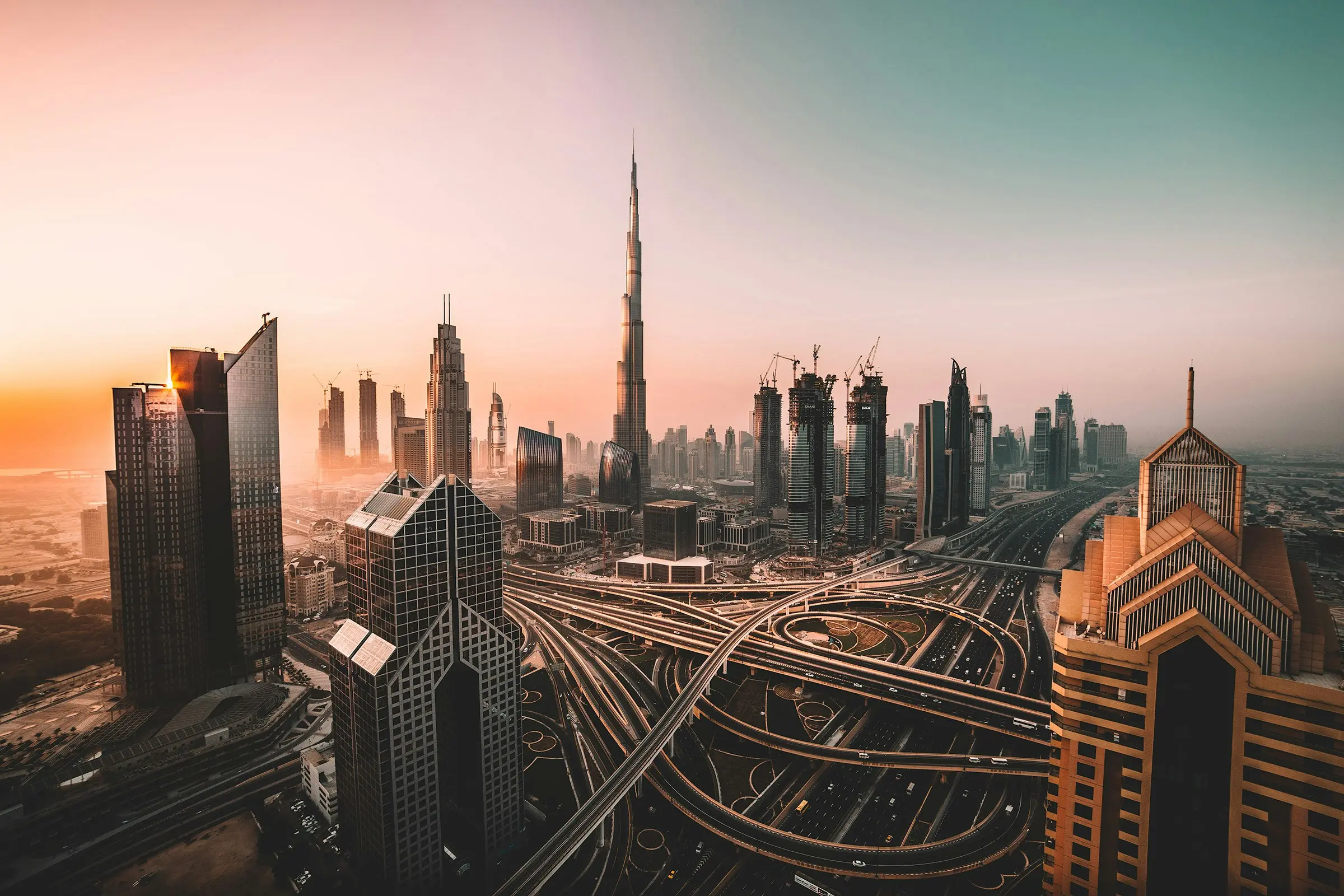
Dubai Property for Swiss Investors 2026: Tax, Returns & Buying Guide"
Complete guide for Swiss investors buying Dubai property in 2026. CHF-AED exchange considerations, Switzerland-UAE DTA benefits, top areas, and step-by-step buying process."
Key Takeaways
- Dubai delivers 6–9% gross rental yields versus 1.5–3% in major Swiss cities — a 3–5x yield premium even after accounting for service charges
- The UAE-Switzerland DTA eliminates double taxation on rental income and capital gains from Dubai property, but Swiss wealth tax may still apply depending on your canton of residence
- CHF-AED currency risk is manageable — the AED-USD peg provides stability, and the CHF has appreciated approximately 15% against the AED over the past decade
- AED 2M+ property purchases qualify for a 10-year Golden Visa with family sponsorship — a significant benefit for Swiss families seeking a second residency
- Freehold ownership in designated areas gives Swiss buyers full property rights with no local sponsor requirement — the same ownership structure as UAE nationals
Dubai Property for Swiss Investors 2026: Tax, Returns & Buying Guide
Swiss investors are discovering what many of the world's wealthy already know: Dubai real estate delivers returns that Swiss property markets simply cannot match. With gross rental yields of 6–9% versus 1.5–3% in Zurich and Geneva, zero property tax in the UAE, and a currency pegged to the US dollar, Dubai presents a compelling case for capital deployment — particularly for Swiss nationals navigating low domestic yields and an evolving cross-border tax landscape.
This guide addresses the specific questions Swiss investors ask when evaluating Dubai property: how the UAE-Switzerland Double Taxation Agreement applies, what Swiss wealth tax obligations remain, how to navigate CHF-AED currency exposure, which Dubai communities align with Swiss lifestyle preferences, and what the complete legal process looks like from first viewing to title deed.
Key Takeaways
- Dubai delivers 6–9% gross rental yields versus 1.5–3% in major Swiss cities — a 3–5x yield premium even after accounting for service charges
- The UAE-Switzerland DTA allocates taxing rights to the UAE for rental income and capital gains from Dubai property — where rates are 0%. Swiss residents pay no Swiss income tax on Dubai rental income and no Swiss capital gains tax on Dubai property sales
- CHF-AED currency risk is manageable — the AED-USD peg provides stability, and the CHF has appreciated approximately 15% against the AED over the past decade, meaning Swiss investors get more property for their franc today
- AED 2M+ property purchases qualify for a 5-year Golden Visa with family sponsorship — a significant benefit for Swiss families seeking a second residency
- Freehold ownership in designated areas gives Swiss buyers full property rights with no local sponsor requirement — the same ownership structure as UAE nationals
Why Swiss Investors Are Choosing Dubai in 2026
Several structural factors are driving increased Swiss interest in Dubai property. Understanding these drivers is essential for any investor evaluating the opportunity.
Yield compression at home. Swiss residential real estate in major cities delivers gross yields of 1.5–3%, barely keeping pace with inflation after costs. The Swiss National Bank's policy rate, while no longer negative, remains low by historical standards. For income-focused Swiss investors, Dubai's 6–9% gross yields — even after service charges of AED 10–22 per square foot — represent a meaningful improvement in portfolio income.
Wealth tax optimization. Switzerland is one of the few countries that levies an annual wealth tax on net assets, including foreign real estate. Rates vary by canton from approximately 0.1% to 0.5% of taxable wealth. While Dubai property does not escape Swiss wealth tax for Swiss-resident investors, the higher yields available in Dubai mean the net return after wealth tax can still significantly exceed Swiss property returns. For Swiss nationals who relocate to the UAE, the wealth tax obligation disappears entirely — a powerful incentive for high-net-worth individuals.
Banking secrecy evolution. Switzerland's automatic exchange of information (AEOI) framework with the UAE, active since 2018, means that Swiss-resident investors cannot hide Dubai property from Swiss tax authorities. However, this transparency cuts both ways: fully declared Dubai investments are compliant and low-risk. The era of undeclared offshore property is over, and legitimate, tax-efficient investment is the path forward.
Political and economic stability. Dubai offers a stable, business-friendly environment with zero income tax, zero capital gains tax, and zero inheritance tax on property. For Swiss investors accustomed to stability but seeking better returns, Dubai provides a familiar governance quality with a dramatically different tax regime.
Lifestyle and connectivity. Direct flights from Zurich and Geneva to Dubai take approximately 6 hours. The UAE grants Swiss citizens visa-on-arrival for 90 days. Dubai's international community, high safety standards, and luxury infrastructure resonate strongly with Swiss lifestyle expectations.
Dubai vs Swiss Real Estate: Returns Comparison
The return differential between Dubai and Swiss property is the single most compelling reason for Swiss investors to consider the emirate. The following comparison uses 2026 market data.
Yield Comparison
| Metric | Dubai | Zurich | Geneva |
|---|---|---|---|
| Gross Rental Yield | 6–9% | 1.5–2.5% | 1.5–3% |
| Net Yield (after costs) | 4.5–7.5% | 0.5–1.5% | 0.5–1.5% |
| Annual Price Growth (2025–26) | 5–12% | 1–3% | 1–2.5% |
| Property Income Tax (in UAE) | 0% | Cantonal income tax | Cantonal income tax |
| Property Income Tax (in CH, for Swiss residents) | 0% (DTA exemption) | Cantonal income tax | Cantonal income tax |
| Capital Gains Tax (in UAE) | 0% | Cantonal CGT (varies) | Cantonal CGT (varies) |
| Capital Gains Tax (in CH, for Swiss residents) | 0% (DTA exemption) | Cantonal CGT (varies) | Cantonal CGT (varies) |
| Annual Wealth Tax | 0% (if UAE-resident) | 0.1–0.5% of asset value | 0.1–0.5% of asset value |
| Transaction Costs (buying) | 5–7% | 2–5% | 2–5% |
| Service Charges | AED 10–22/sqft/year | CHF 3–8/sqmt/month (HOA) | CHF 3–8/sqmt/month (HOA) |
Capital Growth Comparison
| Market | 2023 Growth | 2024 Growth | 2025 Growth | 2026 (est.) |
|---|---|---|---|---|
| Dubai (overall) | +15–20% | +10–15% | +8–12% | +5–8% |
| Dubai (villas) | +20–25% | +15–20% | +12–18% | +8–12% |
| Zurich residential | +2–4% | +1–3% | +1–3% | +1–3% |
| Geneva residential | +1–3% | +1–2% | +1–2% | +1–2.5% |
The data is clear: Dubai delivers significantly higher yields and capital growth than Swiss markets. Even after accounting for Swiss income tax on rental income and wealth tax on the Dubai asset, the net return advantage remains substantial. A CHF 1 million investment in Dubai property generating 7% gross yield delivers approximately CHF 70,000 in annual income. After Swiss income tax at a mid-range marginal rate of 30%, this becomes CHF 49,000 — minus perhaps CHF 1,500–3,000 in Swiss wealth tax depending on canton — a net yield of approximately 4.6–4.75%. The same CHF 1 million in Zurich property might yield CHF 20,000 gross, minus income tax at marginal rates of 20–40%, leaving CHF 12,000–16,000 net — a 1.2–1.6% net yield. Dubai's net yield is still roughly 3x higher after Swiss taxes.
The UAE-Switzerland Double Taxation Agreement
The Double Taxation Agreement between the UAE and Switzerland, which entered into force in 2012, is the foundational document governing how Swiss investors are taxed on Dubai property income. Understanding its provisions is essential.
Key Provisions for Property Investors
Rental income (Article 6). Under Article 6 of the DTA, income from immovable property is taxable in the state where the property is located — the UAE. Since the UAE levies no income tax on rental income, the effective rate is 0%. Switzerland must exempt this income from Swiss taxation (or provide a credit for the UAE tax paid — which is zero). This means Swiss-resident investors pay no Swiss income tax on Dubai rental income. The income must still be declared on the Swiss tax return, and the DTA exemption must be formally claimed, but the result is zero income tax in both jurisdictions. This is one of the most powerful provisions for Swiss investors and a key advantage of Dubai property for Swiss investors over other foreign markets.
Capital gains (Article 13). Under Article 13 of the DTA, capital gains from the sale of immovable property are taxable in the state where the property is located — the UAE. Since the UAE levies no capital gains tax on property sales, the effective rate is 0%. Switzerland must exempt these gains from Swiss taxation. This applies regardless of how long the property has been held. For Swiss investors, this means complete exemption from Swiss capital gains tax on Dubai property sales — a significant advantage over Swiss domestic property, where cantonal capital gains tax rates can range from 10–40% depending on holding period.
Wealth tax (not covered by DTA). The DTA does not address wealth tax. Swiss cantons retain the right to include foreign real estate in the wealth tax base for Swiss-resident taxpayers. However, the taxable value is typically assessed at a fraction of market value (often 60–80% of market value, known as the Steuerwert), and the rates are low (0.1–0.5%). The wealth tax cost on a AED 3 million (approximately CHF 750,000) property would typically range from CHF 450 to CHF 3,750 per year depending on canton.
Practical impact. The DTA allocates taxing rights for Dubai property income to the UAE — where the rate is 0%. Swiss-resident investors pay no Swiss income tax on Dubai rental income and no Swiss capital gains tax on Dubai property sales. The only Swiss tax that applies is wealth tax on the declared asset value. This makes Dubai property uniquely tax-efficient for Swiss investors compared to virtually any other foreign property market.
Important Compliance Requirements
While the DTA eliminates Swiss income tax on Dubai property, Swiss investors must still:
- Declare the property in their annual Swiss tax return as part of their worldwide wealth
- Declare rental income even though it is exempt from Swiss income tax — the DTA exemption must be formally claimed on the tax return
- Maintain documentation including purchase contracts, rental agreements, and proof of source of funds
- Report under AEOI — the Automatic Exchange of Information means UAE financial institutions report account details to Swiss authorities automatically
Failure to declare can result in penalties and back-tax assessments. Swiss tax authorities are well-informed about Dubai property ownership through AEOI and international property registries.
What Changes If You Relocate to the UAE
Swiss nationals who transfer their tax residence to the UAE benefit from:
- Zero Swiss wealth tax on Dubai property (no longer Swiss-resident)
- Zero Swiss income tax on Dubai rental income (no longer Swiss-resident)
- Golden Visa residency with AED 2M+ property purchase
- Potential exit from Swiss tax system — though Switzerland may impose exit taxes on unrealized capital gains for departing residents, depending on canton
This is a significant consideration for Swiss nationals considering a full relocation. The tax savings on a large property portfolio can easily justify the lifestyle change.
Exit tax considerations. Swiss cantons may impose exit taxes (Wegzugssteuer / impôt sur le départ) on unrealised capital gains when a taxpayer transfers their tax residence abroad. The rules vary by canton:
- Zurich, Schwyz, Zug, Nidwalden: No exit tax on departure
- Geneva, Vaud, Bern: Exit tax may apply on unrealised gains in certain assets
- Valais, Ticino: Exit tax applies but can be deferred with security deposit
For Swiss investors holding significant unrealised gains in Swiss assets, the exit tax can be a material consideration. However, the ongoing tax savings from UAE residency (zero income tax, zero wealth tax, zero capital gains tax) typically outweigh the one-time exit tax cost within 2–3 years for high-net-worth individuals. Professional tax advice is essential before making a relocation decision.
CHF-AED Currency Considerations
Currency risk is a legitimate concern for Swiss investors buying AED-denominated assets. Here is a clear-eyed assessment.
The AED-USD Peg
The UAE dirham is pegged to the US dollar at AED 3.6725 per USD. This peg has held since 1997 and is backed by the UAE's substantial foreign reserves and the Central Bank's commitment. For practical purposes, investing in AED is investing in USD.
CHF-AED Historical Context
The Swiss franc has been a strong currency over the past decade, appreciating against both the USD and AED. Key data points:
| Period | CHF/AED Rate | CHF Change |
|---|---|---|
| 2016 | ~1 CHF = 3.7 AED | — |
| 2020 | ~1 CHF = 4.0 AED | +8% |
| 2023 | ~1 CHF = 4.1 AED | +2.5% |
| 2026 (est.) | ~1 CHF = 4.0–4.2 AED | Stable |
The CHF has appreciated roughly 10–15% against the AED over the past decade. This means a Swiss investor who bought Dubai property in 2016 has seen their AED income and capital value decline by approximately 10–15% when converted back to CHF. However, this currency drag is more than offset by the yield and capital growth differential:
- Dubai gross yield: 7% vs Swiss gross yield: 2% — a 5% annual yield advantage
- Dubai capital growth: 8% average vs Swiss: 2% average — a 6% annual growth advantage
- Net advantage before currency: ~11% per year
- Currency drag (if CHF continues to appreciate at ~1.5% per year): -1.5%
- Net advantage after currency: ~9.5% per year
The currency risk is real but manageable. The yield and growth premium more than compensates for moderate CHF appreciation.
Mitigation Strategies
Swiss investors can mitigate CHF-AED currency risk through:
- Long holding periods: Currency fluctuations average out over 5–10 year horizons
- AED-denominated income: Rental income in AED can be reinvested in Dubai, deferring conversion
- Diversification: Dubai property as part of a multi-currency portfolio reduces concentration risk
- Forward contracts: For known future repatriation dates, CHF-AED forward contracts can lock in rates
Top Dubai Areas for Swiss Investors
Swiss investors typically prioritize quality, privacy, and infrastructure maturity. The following five areas align particularly well with Swiss preferences.
Dubai Marina
Dubai Marina is the closest Dubai equivalent to a Swiss lakeside lifestyle — waterfront living, walkable promenades, and a cosmopolitan community. It is the most popular area for European investors in Dubai.
- Price range: AED 1.5M–5M+ for apartments
- Gross yield: 5.5–7.5%
- Key appeal: Waterfront living, yacht marina, extensive dining and retail, proximity to Dubai Media City and Internet City
- Swiss-relevant: Large European expatriate community, German and French widely spoken, high safety standards
Read our Dubai Marina area guide for a detailed neighbourhood breakdown.
Palm Jumeirah
The Palm is Dubai's most prestigious address — a man-made island with beachfront villas and branded residences. It appeals to Swiss investors seeking ultra-prime property with strong capital appreciation.
- Price range: AED 3M–50M+ (villas and penthouses)
- Gross yield: 4–6% (lower yield, higher capital growth)
- Key appeal: Private beaches, branded residences (Fairmont, One&Only, St. Regis), 12%+ annual price growth
- Swiss-relevant: Discreet, gated communities; privacy comparable to Swiss residential standards; strong resale market
Dubai Hills Estate
A master-planned community by Emaar with a championship golf course, parks, and the Dubai Hills Mall. It appeals to Swiss families seeking a suburban lifestyle with urban connectivity.
- Price range: AED 1.2M–8M+ (apartments and villas)
- Gross yield: 5–7% (apartments), 4–5.5% (villas)
- Key appeal: Green spaces, golf course, family-oriented infrastructure, 14%+ annual price growth
- Swiss-relevant: Park-like setting reminiscent of Swiss suburban living; excellent schools (GEMS, Kings); strong community feel
Downtown Dubai
Home to Burj Khalifa, Dubai Mall, and the Dubai Fountain — the heart of the city. It appeals to Swiss investors seeking prime urban real estate with strong rental demand from corporate professionals.
- Price range: AED 2M–15M+ for apartments
- Gross yield: 5–7%
- Key appeal: Iconic address, walkable district, highest rental demand in Dubai, 8%+ annual price growth
- Swiss-relevant: Premium positioning, strong brand recognition (comparable to Zurich's Bahnhofstrasse), excellent property management standards
For a deeper investment analysis, see our Downtown Dubai luxury investment guide.
Jumeirah Village Circle (JVC)
For Swiss investors seeking maximum yield rather than prestige, JVC offers the highest rental returns in Dubai at accessible entry prices.
- Price range: AED 550K–1.5M for apartments
- Gross yield: 7–9%
- Key appeal: Highest yields in Dubai, metro connectivity, rapidly maturing infrastructure
- Swiss-relevant: Strong value proposition; ideal for portfolio diversification with lower capital commitment; see our JVC investment guide for full analysis
Financing Options for Swiss Nationals
Swiss investors have several financing pathways for Dubai property, each with distinct advantages.
UAE Bank Mortgages
UAE banks offer mortgages to non-resident foreign nationals, including Swiss citizens. Key terms in 2026:
| Parameter | Typical Terms |
|---|---|
| Max LTV (non-resident) | 50–60% |
| Interest rate (fixed) | 4.5–5.5% |
| Interest rate (variable) | 4.0–5.0% (EIBOR + margin) |
| Max tenure | 15–25 years |
| Min property value | AED 1M (varies by bank) |
| Eligible nationalities | Swiss citizens eligible at all major UAE banks |
Major UAE banks offering non-resident mortgages include Emirates NBD, Abu Dhabi Commercial Bank (ADCB), Mashreq, and First Abu Dhabi Bank (FAB). Swiss citizens are classified as "Tier 1" nationality applicants, which typically means access to the best available terms.
Documentation requirements typically include: passport copy, proof of income (3 months bank statements, salary certificate or audited business accounts), proof of address, and a credit report from the Swiss credit bureau. Processing takes 3–6 weeks.
Swiss Bank Financing
Some Swiss banks will lend against Swiss assets for the purpose of buying foreign property. This can be attractive when Swiss mortgage rates are lower than UAE rates. However, the property itself cannot serve as collateral for a Swiss bank loan — the loan must be secured against Swiss assets (existing property, securities portfolio, etc.).
Developer Payment Plans
Many Dubai developers offer in-house payment plans that require no bank involvement. These are particularly attractive for Swiss investors who prefer to avoid mortgage processes:
- Standard off-plan plans: 10–20% down payment, balance over 3–7 years
- Post-handover plans: 50% during construction, 50% over 2–5 years after handover
- 1% payment plans: 1% per month for 100 months (increasingly popular in 2026)
Payment plans eliminate the need for a mortgage entirely, though the total price may be 5–15% higher than a cash purchase. For Swiss investors managing cash flow across currencies, the installment structure can be advantageous.
Cash Purchase
Given Switzerland's high household wealth levels, many Swiss investors buy Dubai property with cash. This avoids interest costs entirely and strengthens negotiating position — developers typically offer 5–10% discounts for cash buyers on ready properties.
Legal Process: Step-by-Step for Swiss Buyers
The process for Swiss nationals buying Dubai property is straightforward and well-established.
Step 1: Choose Your Property and Area
Research areas that match your investment goals — yield, capital growth, or lifestyle. Use our Dubai property prices by area comparison to evaluate price points across communities.
Step 2: Engage a RERA-Licensed Agent
All property transactions in Dubai must go through a RERA-licensed broker. Choose an agent experienced with European investors who can guide you through the process remotely if needed. Power of Attorney is accepted for buyers who cannot attend in person — see our Dubai property power of attorney guide for details.
Step 3: Sign the Agreement
For off-plan: Sign the Sale and Purchase Agreement (SPA) with the developer. For ready property: Sign the Memorandum of Understanding (MOU) with the seller. Both documents are available in English.
Step 4: Obtain the No Objection Certificate (NOC)
For ready properties, the seller must obtain an NOC from the developer confirming no outstanding service charges. This typically takes 5–7 business days.
Step 5: Pay the Purchase Price
Transfer funds to the designated escrow account (off-plan) or to the seller's account (ready property). UAE banks require proof of source of funds for transfers exceeding AED 55,000. Swiss bank statements and tax declarations typically satisfy this requirement.
Step 6: Register the Transfer
Attend the transfer at the Dubai Land Department (or via authorized trustee office). Both buyer and seller (or their POA holders) must be present. The DLD charges a 4% transfer fee.
Step 7: Receive the Title Deed
The title deed is issued in the buyer's name — or in a company name if purchasing through a corporate structure. Title deeds are now digital and available through the Dubai REST app.
Timeline
| Transaction Type | Typical Timeline |
|---|---|
| Off-plan purchase | 1–2 weeks (signing to registration) |
| Ready property (cash) | 1–2 weeks (MOU to title deed) |
| Ready property (mortgage) | 3–5 weeks (includes bank processing) |
| With Power of Attorney | Add 1–2 weeks for POA attestation |
Swiss Tax Implications in Detail
This section addresses the specific Swiss tax considerations that apply to Dubai property ownership. Swiss tax law is cantonal, meaning rates and rules vary — always consult a Swiss-licensed tax advisor for your specific situation.
Income Tax on Rental Income
Under the UAE-Switzerland DTA Article 6, rental income from Dubai property is taxable only in the UAE — the state where the property is located. Since the UAE levies no income tax on rental income, the effective rate is 0%. Switzerland must exempt this income from Swiss taxation under the DTA. This means Swiss-resident investors pay no Swiss income tax on Dubai rental income.
The income must still be declared on the Swiss tax return, and the DTA exemption must be formally claimed. Some cantons apply the exemption-with-progression method (Progressionsvorbehalt), meaning the Dubai rental income — while not taxed — may push your other Swiss income into a higher tax bracket. The practical impact depends on the total income level and canton. For most investors, this progression effect is minor relative to the benefit of zero income tax on the rental income itself.
Wealth Tax
Swiss-resident investors must include Dubai property in their wealth tax declaration. The property is typically valued at its market value or a percentage thereof (Steuerwert), depending on cantonal rules. At a 0.3% wealth tax rate (mid-range canton), the annual cost on a CHF 750,000 property would be approximately CHF 2,250.
This cost is modest relative to the yield advantage. A CHF 750,000 Dubai property generating 7% gross yield produces CHF 52,500 in annual income. The wealth tax of CHF 2,250 represents a 4.3% reduction in gross yield — far less impactful than Swiss income tax rates of 20–40% on domestic rental income.
Capital Gains Tax
Under DTA Article 13, capital gains from the sale of Dubai property are taxable only in the UAE — the state where the property is located. Since the UAE levies no capital gains tax, the effective rate is 0%. Switzerland must exempt these gains from Swiss taxation under the DTA. This is a significant advantage over Swiss domestic property, where cantonal capital gains tax rates can range from 10–40% depending on holding period and canton.
Inheritance Tax
The UAE has no inheritance tax. For Swiss-resident investors, Swiss inheritance tax may apply to worldwide assets depending on cantonal rules and the relationship between the deceased and the heir. However, structuring property ownership through a UAE-registered company can potentially mitigate Swiss inheritance tax exposure — professional estate planning advice is essential.
Tax Summary for Swiss-Resident Investors
| Tax Type | Dubai Property | Swiss Property |
|---|---|---|
| Income tax on rental | 0% (DTA exemption — UAE taxing right, UAE rate = 0%) | 20–40%+ (cantonal) |
| Capital gains tax | 0% (DTA exemption — UAE taxing right, UAE rate = 0%) | 10–40% (cantonal, holding period) |
| Wealth tax | 0.1–0.5% of value | 0.1–0.5% of value |
| Inheritance tax | 0% in UAE; may apply in CH | 0–40% (cantonal, relationship) |
| Transaction costs (buying) | 5–7% | 2–5% |
Golden Visa Benefits for Swiss Nationals
The UAE Golden Visa programme is particularly relevant for Swiss investors seeking long-term residency or a second base.
Qualification Through Property Investment
- 5-year Golden Visa: Property purchase of AED 2 million or more
- Family sponsorship: Spouse and children under 25 included
- No sponsor requirement: Visa is not tied to employment
- Multiple entries: Unlimited entries and exits from the UAE
- Duration: 5 years, renewable for similar periods
The AED 2M Sweet Spot
Many Swiss investors target properties in the AED 2–3 million range (approximately CHF 500,000–750,000) to qualify for the Golden Visa while maintaining a manageable investment size. This price range typically buys:
- A two-bedroom apartment in Business Bay or Dubai Marina
- A one-bedroom apartment in Downtown Dubai
- A one-bedroom penthouse in Dubai Hills Estate
For Swiss families, the Golden Visa provides a valuable "Plan B" residency option — a secure, tax-efficient base in a stable jurisdiction. Our Dubai Golden Visa property guide covers the full programme details.
Repatriation of Funds
Swiss investors frequently ask about moving money back to Switzerland from Dubai property sales or rental income.
Outbound: Switzerland to Dubai
Switzerland has no capital controls. Swiss residents can freely transfer CHF to UAE bank accounts. The Swiss National Bank does not restrict outbound capital flows. Transfers are processed through standard SWIFT channels in 1–3 business days.
Inbound: Dubai to Switzerland
The UAE also has no capital controls. Proceeds from property sales or rental income can be freely transferred from UAE bank accounts to Swiss accounts. However, Swiss banks will apply AML checks on incoming funds, particularly for large amounts. Prepare documentation showing the source of funds (sale contract, rental statements, original purchase receipts).
Tax Implications of Repatriation
Repatriating funds to Switzerland does not trigger additional Swiss tax beyond what was already due — rental income was taxed at your Swiss marginal rate when earned, and capital gains treatment depends on cantonal rules. However, the repatriated cash increases your Swiss wealth tax base. For investors who prefer to keep funds offshore, UAE bank accounts and investment platforms offer competitive USD and AED deposit rates.
Investment Strategy Recommendations
Based on the analysis above, here are tailored strategies for different Swiss investor profiles.
For Yield-Focused Swiss Investors
Target studio and one-bedroom apartments in JVC, Business Bay, and Dubai Marina. These deliver the highest gross yields (7–9%) and have strong rental demand from Dubai's professional workforce. Budget AED 550,000–1,500,000 (CHF 137,000–375,000).
For Capital Growth-Focused Swiss Investors
Target villas and townhouses in Dubai Hills Estate, Tilal Al Ghaf, and Arabian Ranches. Supply constraints and family demand support 10–15% annual appreciation. Budget AED 2,000,000–8,000,000 (CHF 500,000–2,000,000).
For Lifestyle-Motivated Swiss Investors
Target Palm Jumeirah villas, Downtown Dubai branded residences, or Emirates Hills. These offer premium lifestyle with strong capital preservation. Budget AED 5,000,000+ (CHF 1,250,000+).
For Portfolio Diversification
Allocate 10–20% of total real estate portfolio to Dubai, focusing on two to three properties across different areas and price points. This provides geographic diversification, currency diversification (CHF vs AED/USD), and yield enhancement without over-concentration. For a broader look at diversification approaches, see our property portfolio diversification strategies guide.
Common Mistakes Swiss Investors Make
Even experienced Swiss investors can make avoidable errors when entering the Dubai market for the first time. Here are the most common pitfalls and how to avoid them.
1. Underestimating currency risk. The CHF has been a structurally strong currency. If it continues to appreciate against the USD (and therefore the AED), your AED-denominated returns shrink when converted back to CHF. Hedge with forward contracts or accept the diversification trade-off — but do not ignore it.
2. Not declaring UAE property in Swiss tax returns. Swiss residents must declare worldwide assets, including UAE property. Failure to declare can result in penalties and back-tax assessments. Rental income from Dubai property is taxable at your Swiss marginal rate — it must be declared on your income tax return, not just the wealth tax return.
3. Overlooking service charges. Dubai properties carry annual service charges (maintenance fees) that range from AED 10–25 per sq ft depending on the building and amenities. These are deducted from gross rental yield and are not tax-deductible in the UAE (because there is no tax to deduct from). Factor them into your net yield calculation.
4. Buying without a Swiss tax structure review. Depending on your canton of residence, total wealth, and investment horizon, holding UAE property through a Swiss holding company or a Liechtenstein Anstalt may reduce your wealth tax burden. This is a decision that should be made before purchase, not after.
5. Ignoring off-plan delivery risk. While DLD escrow accounts provide significant protection, project delays are common in Dubai. Swiss investors accustomed to Swiss construction timelines should expect 6–18 month delays as normal rather than exceptional. For a thorough understanding of off-plan risks and benefits, see our complete off-plan investment guide.
6. Assuming Swiss mortgage terms apply in Dubai. UAE mortgage terms for non-residents are different from Swiss norms — lower LTV (50–60% vs 80% in Switzerland), higher interest rates (4.5–5.5% vs 1.5–2.5% in Switzerland), and shorter tenures (15–25 years vs 15–50 years). Factor these differences into your financing analysis.
Frequently Asked Questions
Can Swiss citizens buy property in Dubai?
Yes. Swiss citizens can buy freehold property in Dubai's designated freehold areas with full ownership rights — the same rights as UAE nationals. No local sponsor or partner is required.
Do Swiss investors pay tax on Dubai rental income?
Yes, if you are a Swiss tax resident. Under the UAE-Switzerland DTA, rental income from Dubai property may be taxed in the UAE — but since the UAE rate is 0%, Switzerland retains the right to tax it at your marginal Swiss rate. There is no foreign tax credit available because the UAE does not levy income tax. The income must be declared on your Swiss tax return. However, the absence of UAE tax means you face only one layer of taxation, not two — unlike investing in most other countries.
Does Dubai property count towards Swiss wealth tax?
Yes. Swiss-resident investors must include Dubai property in their wealth tax declaration. The annual cost is typically 0.1–0.5% of the assessed property value, depending on canton.
How does the CHF-AED exchange rate affect my investment?
The AED is pegged to the USD, so CHF-AED movements track CHF-USD. The CHF has appreciated ~15% against the AED over the past decade, meaning Swiss investors get more property per franc. The yield and growth premium over Swiss property more than compensates for moderate currency risk.
Can I get a mortgage in Dubai as a Swiss non-resident?
Yes. Major UAE banks offer non-resident mortgages to Swiss citizens at 50–60% LTV with interest rates of 4.5–5.5%. Swiss citizens are classified as Tier 1 applicants.
What is the minimum investment for a Golden Visa?
AED 2 million (approximately CHF 500,000) in property purchases qualifies for a 5-year Golden Visa with family sponsorship.
Is my Dubai property protected if a developer goes bankrupt?
Yes. All off-plan payments go into DLD-regulated escrow accounts. If a developer fails to deliver, the escrow funds are used to complete the project or refund buyers. RERA has strengthened escrow protections further in 2026 with more frequent progress-linked drawdowns.
Can I buy Dubai property through a Swiss company?
Yes. Many Swiss investors use a Swiss AG, GmbH, or a UAE-registered company to hold Dubai property. Company ownership can provide tax efficiency, succession planning benefits, and simplified resale. However, company-owned property may have different Golden Visa eligibility — seek legal advice.
How long does the buying process take?
Cash purchases typically complete in 1–2 weeks. Mortgage purchases take 3–5 weeks. Off-plan purchases can be completed in as little as 3–5 days.
What are the risks of buying Dubai property as a Swiss investor?
Key risks include: currency fluctuation (CHF appreciation reduces AED returns), oversupply in affordable segments (JVC, Arjan), potential interest rate changes affecting mortgage costs, and the obligation to declare the asset for Swiss wealth tax. However, Dubai's regulatory framework, population growth trajectory, and zero-tax environment provide meaningful downside protection.
How does Dubai property compare to other international markets for Swiss investors?
Dubai offers a unique combination that few other markets can match for Swiss investors. Compared to London (which imposes stamp duty, capital gains tax for non-residents, and income tax on rental income), Singapore (which restricts foreign ownership and imposes Additional Buyer's Stamp Duty of 30% for foreigners), and Monaco (where prices per square metre exceed Dubai by 3–5x), Dubai provides full freehold ownership, zero transaction taxes beyond the 4% DLD fee, and zero ongoing property taxes. The UAE-Switzerland DTA makes the tax case even stronger — no other major property market offers Swiss investors a 0% effective tax rate on rental income and capital gains through a formal double taxation agreement.
Can I use rental income from Dubai property to qualify for a Swiss mortgage?
Some Swiss banks may consider Dubai rental income when assessing mortgage affordability for Swiss property purchases, but the treatment varies. Because the income is DTA-exempt, some banks exclude it from their affordability calculations, while others include it at a discounted rate (typically 70–80% of gross income) to account for currency risk. Check with your specific bank — UBS and Julius Baer tend to be more accommodating than smaller cantonal banks.
This guide is for informational purposes only and does not constitute financial, tax, or legal advice. Swiss tax law varies by canton and individual circumstances. Always consult a Swiss-licensed tax advisor and a UAE-licensed legal professional before making investment decisions. Data sources: Dubai Land Department (DLD), Swiss Federal Statistical Office, UAE Central Bank, CBRE, ValuStrat. Market data reflects conditions through May 2026.
Frequently Asked Questions
Can Swiss citizens buy property in Dubai?
Yes. Swiss citizens can buy freehold property in Dubai's designated freehold areas with full ownership rights — the same rights as UAE nationals. No local sponsor or partner is required.
Do Swiss investors pay tax on Dubai rental income?
No. Under the UAE-Switzerland Double Taxation Agreement, rental income from Dubai property is taxable only in the UAE, where the rate is 0%. Swiss-resident investors must declare the income but claim the DTA exemption.
Does Dubai property count towards Swiss wealth tax?
Yes. Swiss-resident investors must include Dubai property in their wealth tax declaration. The annual cost is typically 0.1–0.5% of the assessed property value, depending on canton.
How does the CHF-AED exchange rate affect my investment?
The AED is pegged to the USD, so CHF-AED movements track CHF-USD. The CHF has appreciated ~15% against the AED over the past decade, meaning Swiss investors get more property per franc. The yield and growth premium over Swiss property more than compensates for moderate currency risk.
Can I get a mortgage in Dubai as a Swiss non-resident?
Yes. Major UAE banks offer non-resident mortgages to Swiss citizens at 50–60% LTV with interest rates of 4.5–5.5%. Swiss citizens are classified as Tier 1 applicants.
What is the minimum investment for a Golden Visa?
AED 2 million (approximately CHF 500,000) in property purchases qualifies for a 10-year Golden Visa with family sponsorship.
Is my Dubai property protected if a developer goes bankrupt?
Yes. All off-plan payments go into DLD-regulated escrow accounts. If a developer fails to deliver, the escrow funds are used to complete the project or refund buyers.
Can I buy Dubai property through a Swiss company?
Yes. Many Swiss investors use a Swiss AG, GmbH, or a UAE-registered company to hold Dubai property. Company ownership can provide tax efficiency, succession planning benefits, and simplified resale.
How long does the buying process take?
Cash purchases typically complete in 1–2 weeks. Mortgage purchases take 3–5 weeks. Off-plan purchases can be completed in as little as 3–5 days.
What are the risks of buying Dubai property as a Swiss investor?
Key risks include: currency fluctuation, oversupply in affordable segments, potential interest rate changes affecting mortgage costs, and the obligation to declare the asset for Swiss wealth tax.
Editorial Team
AiGentsRealtyThe AiGentsRealty editorial team consists of real estate experts, market analysts, and property consultants with over 20 years of combined experience in the Dubai real estate market.
Related Articles
Dubai South Off-Plan Investment Guide 2026: The Airport City Boom
Discover why Dubai South is offering gross rental yields of 7-9% and massive capital appreciation potential driven by the Al Maktoum International Airport expansion.
Investment GuidesDubai Multi-Unit Property Portfolio Management Guide 2026
Learn how to build and manage a profitable multi-unit property portfolio in Dubai — from financing and area selection to tenant management and risk mitigation for 2026.
Investment GuidesBest Off-Plan Projects Under 1M AED in Dubai 2026
Discover the top off-plan projects in Dubai under 1 million AED for 2026 — from JVC studios to Arjan apartments, with payment plans, ROI projections, and developer analysis.
Ready to Invest in Dubai?
Get personalized investment recommendations from our AI advisor based on your budget, goals, and preferences.
Ask Sophia AI