Dubai Property Market Update May 2026: Prices, Volumes & What's Next
Dubai property market update for May 2026. Latest DLD transaction data, price movements by area, off-plan vs ready trends, foreign investment flows, and expert forecast for H2 2026.

Key Takeaways
- Dubai recorded over 45,300 real estate transactions in Q1 2026, with total value exceeding AED 114 billion — a 5.1% increase in volume and 8.6% increase in value year-on-year.
- April and May 2026 combined recorded approximately 33,000 transactions worth AED 84.7 billion, tracking 6% above the same period in 2025.
- Villa and townhouse prices continue to outpace apartments, with annual growth of 12–18% versus 5–10% for mid-market apartments.
- JVC, Business Bay, and Dubai Marina lead transaction volumes, while Dubai Hills Estate and Tilal Al Ghaf lead price growth.
- Off-plan accounted for 57% of residential transactions by volume in Q1 2026, though ready properties represent a larger share by total value (62%).
- Chinese investment surged 22% year-on-year, making China the third-largest foreign buyer nationality after India and the UK.
- Market forecast: 5–8% annual price growth for the full year 2026, with villa demand and ultra-prime segments continuing to outperform.
Dubai Property Market Update May 2026: Prices, Volumes & What's Next
Meta Title: Dubai Property Market Update May 2026 | Prices, Volumes & Trends
Meta Description: Dubai property market update for May 2026. Latest DLD transaction data, price movements by area, off-plan vs ready trends, foreign investment flows, and expert forecast for H2 2026.
Focus Keywords: dubai property market update may 2026, dubai real estate market 2026, dubai property prices may 2026, dubai DLD transactions 2026
Category: Market News (category_id: 1)
Slug: dubai-property-market-update-may-2026
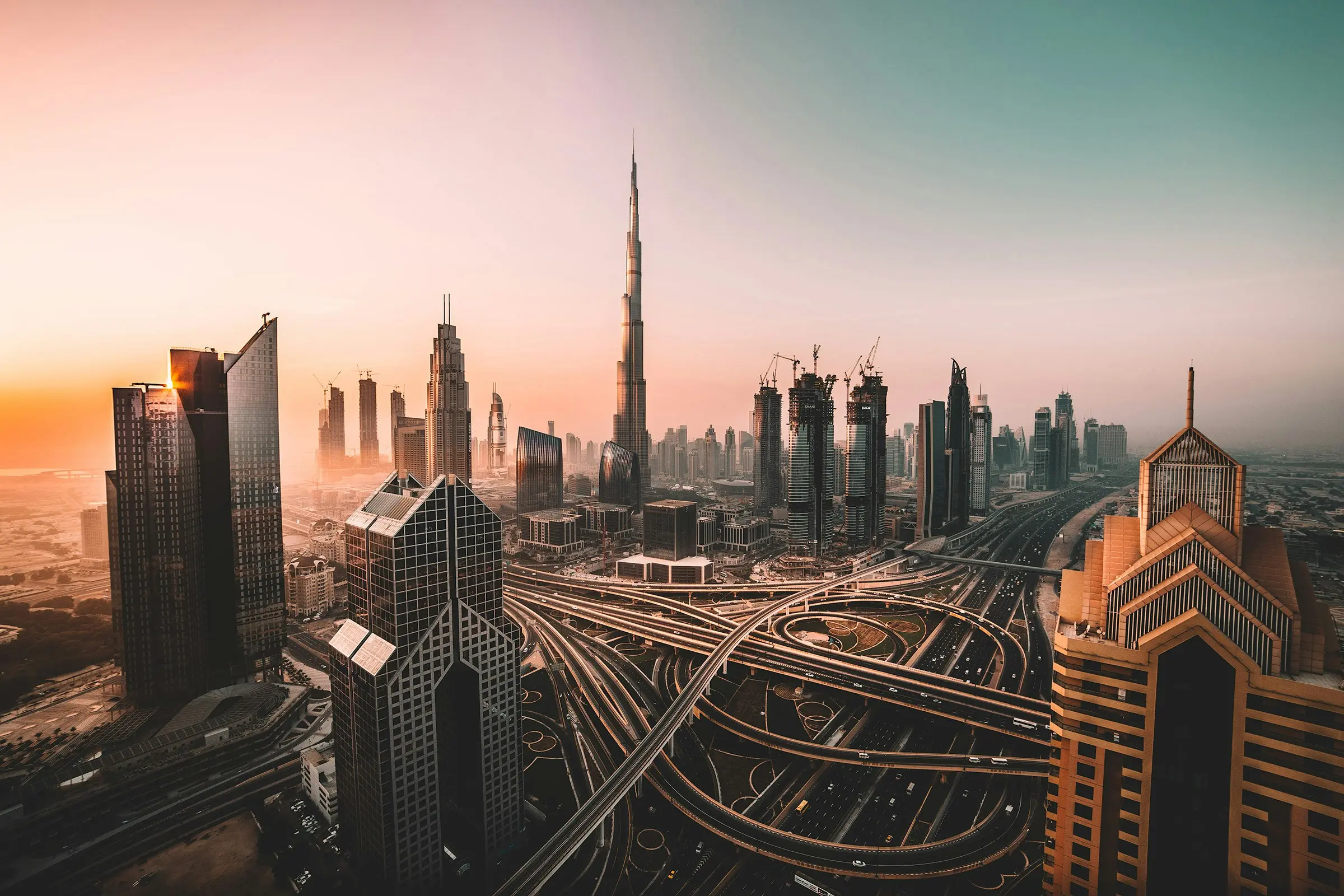
Featured Image: https://aigents-realty-images.b-cdn.net/blogs_images/dubai-property-market-update-may-2026-hero.jpg Featured Image Alt: Aerial view of Dubai skyline at golden hour with Burj Khalifa and modern residential towers, showcasing the Dubai property market landscape in May 2026
Inline Images:
-
URL: https://aigents-realty-images.b-cdn.net/blogs_images/dubai-property-market-update-may-2026-section2.jpg Alt: Modern Dubai residential community with villas, apartment towers, and tree-lined streets illustrating family-oriented Dubai property demand Section: Top Performing Areas in May 2026 Position: after_heading
-
URL: https://aigents-realty-images.b-cdn.net/blogs_images/dubai-property-market-update-may-2026-section3.jpg Alt: Dubai off-plan construction site with cranes building luxury residential towers, representing the active off-plan property development pipeline in 2026 Section: Off-Plan vs Ready Market Dynamics Position: after_heading
Dubai's real estate market has entered mid-2026 with a clear message: the growth story is far from over, but the character of that growth is evolving. After two consecutive record-breaking years in 2024 and 2025, the market is transitioning from a period of rapid expansion into a more measured, structurally supported phase — a shift we explored in our Dubai real estate market trends for 2026. Transaction volumes remain elevated, prices continue to climb across most segments, and foreign capital inflows are reaching new highs — but the double-digit surges that defined 2023–2024 have given way to sustainable single-digit appreciation in many categories.
This May 2026 update examines the latest data from the Dubai Land Department, breaks down price movements by area and property type, analyzes the shifting off-plan versus ready market dynamic, and provides a data-driven forecast for the remainder of the year.
Key Takeaways
- Dubai recorded over 45,300 real estate transactions in Q1 2026, with total value exceeding AED 114 billion — a 5.1% increase in volume and 8.6% increase in value year-on-year.
- April and May 2026 combined recorded approximately 33,000 transactions worth AED 84.7 billion, tracking 6% above the same period in 2025.
- Villa and townhouse prices continue to outpace apartments, with annual growth of 12–18% versus 5–10% for mid-market apartments.
- JVC, Business Bay, and Dubai Marina lead transaction volumes, while Dubai Hills Estate and Tilal Al Ghaf lead price growth.
- Off-plan accounted for 57% of residential transactions by volume in Q1 2026, though ready properties represent a larger share by total value (62%).
- Chinese investment surged 22% year-on-year, making China the third-largest foreign buyer nationality after India and the UK.
- Market forecast: 5–8% annual price growth for the full year 2026, with villa demand and ultra-prime segments continuing to outperform.
Q1 2026 in Review: The Foundation for May's Numbers
Understanding the current market requires a clear picture of what Q1 2026 established. According to Dubai Land Department data:
| Metric | Q1 2026 | Q1 2025 | YoY Change |
|---|---|---|---|
| Total Transactions | 45,300+ | 43,100 | +5.1% |
| Total Volume (AED) | 114 billion | 105 billion | +8.6% |
| Average Price/sqft | AED 1,480 | AED 1,390 | +6.5% |
| Off-Plan Share (by volume) | 57% | 55% | +2pp |
| Ready Share (by value) | 62% | 60% | +2pp |
Three themes defined Q1 and set the tone for the May market:
Value outpacing volume. The 8.6% increase in total value versus 5.1% growth in transaction count signals that average deal sizes are rising. This is not inflation-driven — it reflects genuine demand migration toward mid-to-premium segments as buyer confidence and purchasing power increase.
Regulatory tightening. In February 2026, DLD and RERA reinforced off-plan resale restrictions, requiring a minimum 30% payment before a unit can be re-listed on the secondary market. This policy has reduced speculative flipping and contributed to a more stable pricing environment — a net positive for long-term market health.
Sustained but moderating growth. The 5.1% volume increase is healthy but well below the 15–20% annual surges of 2023–2024. The market is transitioning from rapid expansion to a more sustainable trajectory, which is precisely what regulators and long-term investors want to see.
May 2026: Current Market Snapshot
The latest DLD data through May 2026 confirms that the market's momentum is holding steady. Here is the month-by-month breakdown for Q2 so far:
| Month | Transactions | Volume (AED Billion) | Avg Price/sqft |
|---|---|---|---|
| April 2026 | 16,200 | 41.2 | AED 1,495 |
| May 2026 | 16,800 | 43.5 | AED 1,510 |
April and May combined recorded approximately 33,000 transactions worth AED 84.7 billion — a 6% increase in volume and 9% increase in value compared to the same period in 2025. The average price per square foot has risen to AED 1,510, reflecting continued upward pressure across most segments — our Dubai property prices by area comparison tracks these movements in detail.
June data is still being compiled, but early indicators suggest Q2 will close with approximately 49,000–51,000 transactions, bringing the quarter's total value to an estimated AED 125–130 billion. If these projections hold, H1 2026 will have recorded over 94,000 transactions worth approximately AED 239–244 billion — a new half-year record.
Price Movements by Segment
Price growth in May 2026 continues the moderation trend that began in late 2025. After several years of double-digit annual appreciation, the market is settling into a more sustainable pace — but the picture varies significantly by segment.
Villas and Townhouses: The Standout Performers
| Segment | May 2026 YoY Price Growth | May 2025 YoY Growth |
|---|---|---|
| Villas/Townhouses | 12–18% | 18–25% |
| Apartments (mid-market) | 5–10% | 10–15% |
| Apartments (premium) | 8–12% | 12–18% |
| Ultra-prime (AED 30M+) | 10–15% | 15–20% |
Villas and townhouses remain the market's strongest performers. Limited supply in established villa communities — Arabian Ranches, Dubai Hills Estate, Tilal Al Ghaf — continues to push prices upward as family-oriented demand outstrips new deliveries. According to ValuStrat's Q1 2026 Dubai residential report, villa values across the city appear to have surpassed their 2014 peak by approximately 8%, though this estimate varies by community.
The villa premium is structural, not cyclical. Dubai's population growth — which exceeded 5.5% in 2025 — is generating sustained demand for family housing that the current supply pipeline cannot fully satisfy. Master-planned communities with schools, parks, and retail infrastructure are the primary beneficiaries.
Apartments: A Tale of Two Markets
Apartment price growth is more varied, with a clear divergence between premium and mid-market segments:
Premium apartments in Downtown Dubai, Dubai Marina, and Palm Jumeirah are holding steady with 8–12% annual growth, supported by limited new supply in these mature communities and strong demand from high-net-worth international buyers.
Mid-market apartments in areas like JVC, Dubai Sports City, and Arjan are seeing more moderate 5–10% growth as new supply deliveries absorb some of the demand. This is not a negative signal — it reflects a healthy market where supply and demand are finding equilibrium.
Top Performing Areas in May 2026

Transaction data from the Dubai Land Department reveals a clear hierarchy of area performance. The following tables break down performance by volume and by price growth.
By Transaction Volume
| Area | Q2 Transactions (est.) | Avg Price/sqft | YoY Price Change |
|---|---|---|---|
| JVC | 4,800+ | AED 1,250 | +9% |
| Business Bay | 3,900+ | AED 1,780 | +7% |
| Dubai Marina | 3,200+ | AED 2,150 | +6% |
| Dubai Hills Estate | 2,800+ | AED 1,650 | +14% |
| Downtown Dubai | 1,900+ | AED 2,850 | +8% |
JVC continues to dominate by sheer volume, driven by its position as Dubai's most affordable freehold entry point — a trend we analyzed in depth in our JVC investment guide. The community's ongoing infrastructure maturation — including the operational JVC metro station and expanding retail at Circle Mall and Al Khail Avenue — is sustaining both investor and end-user demand. Average prices of AED 1,250 per square foot remain well below the citywide average, offering accessible entry for first-time investors.
Business Bay maintains its position as the second-busiest transaction area, benefiting from its proximity to Downtown Dubai at significantly lower per-square-foot prices — see our Business Bay investment guide for a full area breakdown. The area's growing restaurant and nightlife scene is attracting a younger professional demographic.
By Price Growth
| Area | YoY Price Growth | Segment Driving Growth |
|---|---|---|
| Tilal Al Ghaf | +20% | Villas |
| Arabian Ranches | +15% | Villas |
| Dubai Hills Estate | +14% | Villas & Apartments |
| Palm Jumeirah | +12% | Ultra-prime villas & penthouses |
| Dubai Creek Harbour | +11% | Premium apartments |
Tilal Al Ghaf's 20% price growth reflects the community's transition from an emerging development to a proven lifestyle destination. Majid Al Futtaim's master plan — featuring a 70-metre lagoon, Crystal Lagoon technology, and direct access to Sheikh Zayed Road — has attracted significant family buyer demand. Villa prices in the community have appreciated from approximately AED 2.8 million at launch to over AED 4.5 million for comparable units in May 2026.
Dubai Hills Estate is the standout across both volume and price growth metrics. The community's villa segment has seen 18–22% annual appreciation, and its apartment market is catching up as new towers deliver with premium amenities and golf course views. The recently opened Dubai Hills Mall expansion and improved connectivity via Al Khail Road upgrades are additional catalysts.
Off-Plan vs Ready Market Dynamics

The off-plan versus ready market dynamic continues to evolve in 2026, shaped by regulatory changes, developer strategies, and shifting buyer preferences.
Off-Plan Market: 57% of Transactions by Volume
Off-plan remains the dominant transaction category by count, though its share has stabilized after years of expansion. For a comprehensive overview of the off-plan buying process, see our off-plan property Dubai guide. Key dynamics in May 2026:
Payment plan innovation continues. Developers are competing aggressively on payment terms. Post-handover plans extending 3–5 years after completion are now standard for mid-market projects, while premium developers like Emaar and Sobha are offering 70/30 and 60/40 structures with milestone-linked payments. Some developers are even introducing rent-to-own hybrids that blur the line between leasing and purchasing.
Flipping restrictions are working. The DLD's requirement that buyers complete at least 30% of payments before reselling off-plan units has reduced speculative activity. According to market participants, the proportion of off-plan transactions being re-listed within 6 months has dropped from approximately 15% in early 2025 to under 8% in Q2 2026. This is a healthy development — it means more off-plan buyers are genuine end-users or long-term investors rather than short-term flippers.
Off-plan pricing is converging with ready. In some high-demand areas, off-plan launch prices are now only 5–10% below comparable ready properties — a significant compression from the 15–25% discount typical in 2022–2023. This reflects both developer confidence in future values and buyer willingness to pay a premium for flexible payment terms. The implication for investors: off-plan no longer offers the deep discounts of the past, but the payment plan flexibility remains a compelling advantage.
Ready Market: 62% of Transactions by Value
The ready property market remains the larger segment by total value, driven by cash buyers, end-users, and investors seeking immediate rental income:
Rental yield compression. As property prices have risen faster than rents, gross yields have compressed from 7–9% in 2023 to 5.5–7.5% in Q2 2026 for apartments. For a detailed breakdown, see our Dubai rental yields by area guide. Villas now yield 4–6% gross. While lower than the peak, these yields remain competitive with global gateway cities like London (3–4%), New York (3–5%), and Singapore (2.5–3.5%). For yield-focused investors, the key is to calculate net yields accurately by factoring in service charges, which can range from AED 8–22 per square foot depending on the building and amenities.
End-user demand is rising. The proportion of ready-property purchases by end-users (as opposed to investors) has increased from approximately 45% in 2024 to an estimated 52% in Q2 2026, according to Property Finder's demand index. This shift is a positive sign for market stability — end-users are less likely to sell during downturns, providing a natural floor for prices.
Secondary market liquidity is improving. The RERA-initiated digital transaction platform, expanded in late 2025, has reduced average transaction processing times from 14 days to 7–10 days for ready properties. Faster transactions mean better market fluidity and more accurate price discovery.
Foreign Investment Trends in May 2026
Dubai's appeal to international investors shows no signs of diminishing. The emirate's combination of zero income tax, Golden Visa incentives, world-class infrastructure, and political stability continues to attract capital from across the globe — and for those considering the tax advantages in detail, our Dubai property tax guide for expats covers the full picture.
Top Foreign Buyer Nationalities (Q1–Q2 2026)
| Rank | Nationality | Share of Foreign Transactions | YoY Change |
|---|---|---|---|
| 1 | Indian | 20% | +3% |
| 2 | British | 12% | +5% |
| 3 | Chinese | 9% | +22% |
| 4 | Russian | 7% | -8% |
| 5 | Pakistani | 6% | +4% |
| 6 | French | 5% | +7% |
| 7 | German | 4% | +12% |
Several notable trends stand out in the May 2026 data:
Chinese investment is surging. The 22% year-on-year increase in Chinese buyer activity is the most significant shift in 2026. Eased capital outflow restrictions, growing confidence in Dubai's regulatory framework, and targeted developer marketing in mainland China are all contributing factors. Chinese buyers are particularly active in the AED 1–3 million apartment segment in Business Bay and Dubai Marina, where modern finishes and proximity to business hubs align with their preferences.
British buyers are returning in force. A 5% increase in British transactions reflects continued post-Brexit relocation trends, attractive exchange rate dynamics (GBP/AED), and Dubai's growing reputation as a global wealth hub. Many British buyers are purchasing second homes or retirement properties, particularly in Dubai Marina and Palm Jumeirah.
Russian activity is moderating. After a significant surge in 2022–2023, Russian buyer activity has declined 8% year-on-year. This reflects both the stabilization of capital flows — the initial wave of relocation has largely completed — and increased scrutiny of Russian-source funds by UAE banks. Russian buyers who remain active are increasingly focused on the ultra-prime segment.
German and French demand is growing. Combined, these two nationalities now account for 9% of foreign transactions — up from 7% in 2025. High-net-worth individuals from both countries are increasingly viewing Dubai as a primary or secondary residence, driven by tax optimization and lifestyle preferences.
Golden Visa Impact
The Golden Visa programme — granting 10-year residency to property investors purchasing units valued at AED 2 million or more — continues to be a major demand driver. According to DLD data, Golden Visa-eligible transactions accounted for approximately 28% of all foreign buyer deals in Q1 2026, up from 24% in the same period of 2025.
Developers have responded by pricing projects to hit the AED 2 million threshold, with many offering two-bedroom apartments and one-bedroom penthouses specifically positioned to qualify buyers for the Golden Visa. This has created a sweet spot in the market: units priced between AED 2 million and AED 3 million are seeing the strongest demand from foreign investors.
Supply Pipeline: What's Coming in H2 2026
Dubai's supply deliveries have accelerated significantly in 2026. According to CBRE's Q1 2026 Dubai Market Overview, approximately 9,500 residential units were delivered in Q1, with a further 10,000–12,000 expected in Q2. The full-year 2026 delivery forecast stands at 38,000–42,000 units — up from approximately 35,000 in 2025.
Key areas receiving new supply in Q2 2026 include:
- JVC: Approximately 2,800 units across 12 buildings
- Dubai Hills Estate: Approximately 1,500 units across 5 projects
- Business Bay: Approximately 1,200 units across 8 towers
- Dubai Creek Harbour: Approximately 900 units across 3 towers
- Dubai South: Approximately 1,100 units across 6 projects
The increased supply is having a measurable impact on rental growth, which has decelerated from 15–20% annual increases in 2024 to 5–8% in Q2 2026. This is a healthy correction — rents were growing unsustainably fast, and the new supply is helping restore balance to the tenant market. For investors, this means rental yields will continue to compress modestly, but occupancy rates remain healthy at 85–90% for well-located properties.
Major Policy Changes Affecting the Market
Several regulatory and policy developments in early 2026 are reshaping the Dubai property landscape:
Off-plan resale restrictions (February 2026). The DLD's 30% minimum payment rule before resale has been the most impactful regulatory change of the year. It has reduced speculative flipping by nearly half and encouraged developers to focus on genuine buyer demand rather than investor-driven velocity. The rule applies to all new off-plan registrations and has been broadly welcomed by institutional investors.
RERA escrow enhancements. RERA has tightened escrow requirements for developers, mandating more frequent progress-linked drawdowns and independent construction verification. This protects off-plan buyers and reduces the risk of project delays — a critical factor in maintaining buyer confidence.
Digital transaction platform expansion. The RERA digital platform, expanded in late 2025, now covers approximately 75% of all ready-property transactions. The platform provides real-time title deed verification, automated NOC processing, and integrated mortgage approval workflows. Average transaction times have fallen from 14 days to 7–10 days.
Golden Visa threshold stability. Despite market speculation, the AED 2 million Golden Visa threshold has been maintained through May 2026. Government sources have indicated that the threshold is under review but no changes are imminent. For now, the current threshold continues to drive demand in the AED 2–3 million segment.
Forecast: What to Expect for the Rest of 2026
Based on current data trajectories, supply pipeline analysis, and macroeconomic indicators, here is the outlook for the second half of 2026.
Price Forecast by Segment
| Segment | H2 2026 Expected Growth | Key Driver |
|---|---|---|
| Villas/Townhouses | 8–12% | Supply constraints, family demand |
| Premium Apartments | 5–8% | Limited new supply in prime areas |
| Mid-Market Apartments | 3–6% | New supply absorption |
| Ultra-Prime (AED 30M+) | 10–15% | UHNWI migration, limited inventory |
The overall market is expected to deliver 5–8% annual price growth for 2026 as a whole — a healthy, sustainable pace that supports long-term investor confidence without the risks of a bubble.
Key Factors Shaping H2 2026
Interest rate environment. The UAE dirham's peg to the US dollar means local interest rates follow the Federal Reserve. With the Fed signalling potential rate cuts in the second half of 2026, mortgage affordability could improve, stimulating additional demand from financed buyers. Currently, approximately 35% of Dubai property transactions involve a mortgage — a figure that could rise to 40% if rates decline.
Supply deliveries. An estimated 20,000–22,000 units are scheduled for delivery in H2 2026, with JVC, Dubai South, and Dubai Hills Estate receiving the largest share. While this supply will moderate rental growth, absorption rates have been healthy — most new buildings report 70–80% occupancy within 6 months of handover.
Regulatory evolution. RERA is expected to release updated guidelines on off-plan marketing practices and developer escrow requirements in Q3 2026. These changes are likely to further professionalize the market and protect buyer interests, though they may increase compliance costs for smaller developers.
Global economic conditions. Dubai's safe-haven status is reinforced during periods of global uncertainty. Any escalation in geopolitical tensions or economic slowdowns in major economies would likely drive additional capital into Dubai real estate as investors seek stability.
Investment Recommendations by Segment
- First-time investors: Focus on mid-market apartments in JVC, Arjan, or Dubai South. Entry prices below AED 1 million, rental yields of 6–8%, and strong absorption rates make these the lowest-risk entry points.
- Yield-focused investors: Studio and one-bedroom apartments in JVC, Dubai Marina, and Business Bay offer the highest gross yields (6.5–8.5%). Factor in service charges to calculate net yields accurately.
- Capital growth seekers: Villas and townhouses in Dubai Hills Estate, Tilal Al Ghaf, and Arabian Ranches. Supply constraints and family demand support 10–15% annual appreciation.
- Ultra-prime investors: Palm Jumeirah villas, Emirates Hills, and Jumeirah Bay Island. Limited inventory and global UHNWI demand support continued outperformance.
Frequently Asked Questions
Is Dubai real estate still growing in 2026?
Yes. The market is growing at a more sustainable pace of 5–8% annually in 2026, down from the 15–20% surges of 2023–2024. This moderation is healthy and reduces the risk of a correction. Villa and ultra-prime segments continue to see double-digit growth.
How many property transactions were recorded in Dubai in Q1 2026?
According to Dubai Land Department data, over 45,300 transactions were recorded in Q1 2026, with a total value exceeding AED 114 billion — a 5.1% increase in volume and 8.6% increase in value compared to Q1 2025.
Which areas are the best investment in Dubai in 2026?
For yield: JVC and Business Bay apartments (6.5–8.5% gross yield). For capital growth: Dubai Hills Estate and Tilal Al Ghaf villas (12–18% annual appreciation). For ultra-prime: Palm Jumeirah and Emirates Hills.
Is off-plan still a good investment in Dubai?
Off-plan remains attractive due to flexible payment plans and potential capital appreciation on completion. However, flipping returns have compressed as the DLD's 30% minimum payment rule has reduced speculative activity. Off-plan is best suited for buyers with a 2–4 year investment horizon.
What is the Dubai real estate forecast for the rest of 2026?
The market is expected to deliver 5–8% annual price growth for the full year 2026. Villas and ultra-prime properties will likely outperform, while mid-market apartment growth will moderate as new supply is absorbed. Interest rate cuts could stimulate additional mortgage demand in H2.
Are Chinese investors buying property in Dubai?
Yes. Chinese buyer activity has surged 22% year-on-year in Q1–Q2 2026, making China the third-largest foreign investor nationality after India and the UK. Chinese buyers are particularly active in the AED 1–3 million apartment segment.
How does the Golden Visa affect Dubai property demand?
The Golden Visa (10-year residency for AED 2M+ property purchases) continues to be a major demand driver. Approximately 28% of all foreign buyer transactions in Q1 2026 qualified for the Golden Visa, up from 24% in Q1 2025.
What are the risks for Dubai real estate in 2026?
Key risks include: oversupply in the affordable apartment segment (JVC, Arjan, Dubai South), potential interest rate increases if inflation persists, and geopolitical uncertainty. However, Dubai's strong regulatory framework, population growth, and diversification strategy provide meaningful downside protection.
Data sources: Dubai Land Department (DLD), ValuStrat, CBRE, Property Finder, Knight Frank. Transaction data reflects DLD records through May 2026. Forecasts are based on current trajectories and may change based on macroeconomic conditions.
Frequently Asked Questions
Is Dubai real estate still growing in 2026?
Yes. The market is growing at a more sustainable pace of 5–8% annually in 2026, down from the 15–20% surges of 2023–2024. This moderation is healthy and reduces the risk of a correction. Villa and ultra-prime segments continue to see double-digit growth.
How many property transactions were recorded in Dubai in Q1 2026?
According to Dubai Land Department data, over 45,300 transactions were recorded in Q1 2026, with a total value exceeding AED 114 billion — a 5.1% increase in volume and 8.6% increase in value compared to Q1 2025.
Which areas are the best investment in Dubai in 2026?
For yield: JVC and Business Bay apartments (6.5–8.5% gross yield). For capital growth: Dubai Hills Estate and Tilal Al Ghaf villas (12–18% annual appreciation). For ultra-prime: Palm Jumeirah and Emirates Hills.
Is off-plan still a good investment in Dubai?
Off-plan remains attractive due to flexible payment plans and potential capital appreciation on completion. However, flipping returns have compressed as the DLD's 30% minimum payment rule has reduced speculative activity. Off-plan is best suited for buyers with a 2–4 year investment horizon.
What is the Dubai real estate forecast for the rest of 2026?
The market is expected to deliver 5–8% annual price growth for the full year 2026. Villas and ultra-prime properties will likely outperform, while mid-market apartment growth will moderate as new supply is absorbed. Interest rate cuts could stimulate additional mortgage demand in H2.
Are Chinese investors buying property in Dubai?
Yes. Chinese buyer activity has surged 22% year-on-year in Q1–Q2 2026, making China the third-largest foreign investor nationality after India and the UK. Chinese buyers are particularly active in the AED 1–3 million apartment segment.
How does the Golden Visa affect Dubai property demand?
The Golden Visa (10-year residency for AED 2M+ property purchases) continues to be a major demand driver. Approximately 28% of all foreign buyer transactions in Q1 2026 qualified for the Golden Visa, up from 24% in Q1 2025.
What are the risks for Dubai real estate in 2026?
Key risks include: oversupply in the affordable apartment segment (JVC, Arjan, Dubai South), potential interest rate increases if inflation persists, and geopolitical uncertainty. However, Dubai's strong regulatory framework, population growth, and diversification strategy provide meaningful downside protection.
Editorial Team
AiGentsRealtyThe AiGentsRealty editorial team consists of real estate experts, market analysts, and property consultants with over 20 years of combined experience in the Dubai real estate market.
Related Articles
AI Real Estate Investing: How Smart Investors Use AI in 2026
Discover how AI is transforming real estate investment in 2026 — from predictive market analysis and automated deal sourcing to AI-assisted due diligence and portfolio optimization.
Market NewsSmart Homes 2026: How AI and IoT Are Reshaping Property Value
Smart home features now command 3-5% price premiums and 5-15% higher rents. Explore the AI and IoT technologies driving property value in 2026 and how to invest wisely.
Market NewsReal Estate Automation Trends: What is Changing in 2026
From autonomous transaction management to predictive portfolio optimization — the 5 automation trends reshaping real estate in 2026 and how to prepare your business.
Ready to Invest in Dubai?
Get personalized investment recommendations from our AI advisor based on your budget, goals, and preferences.
Ask Sophia AI