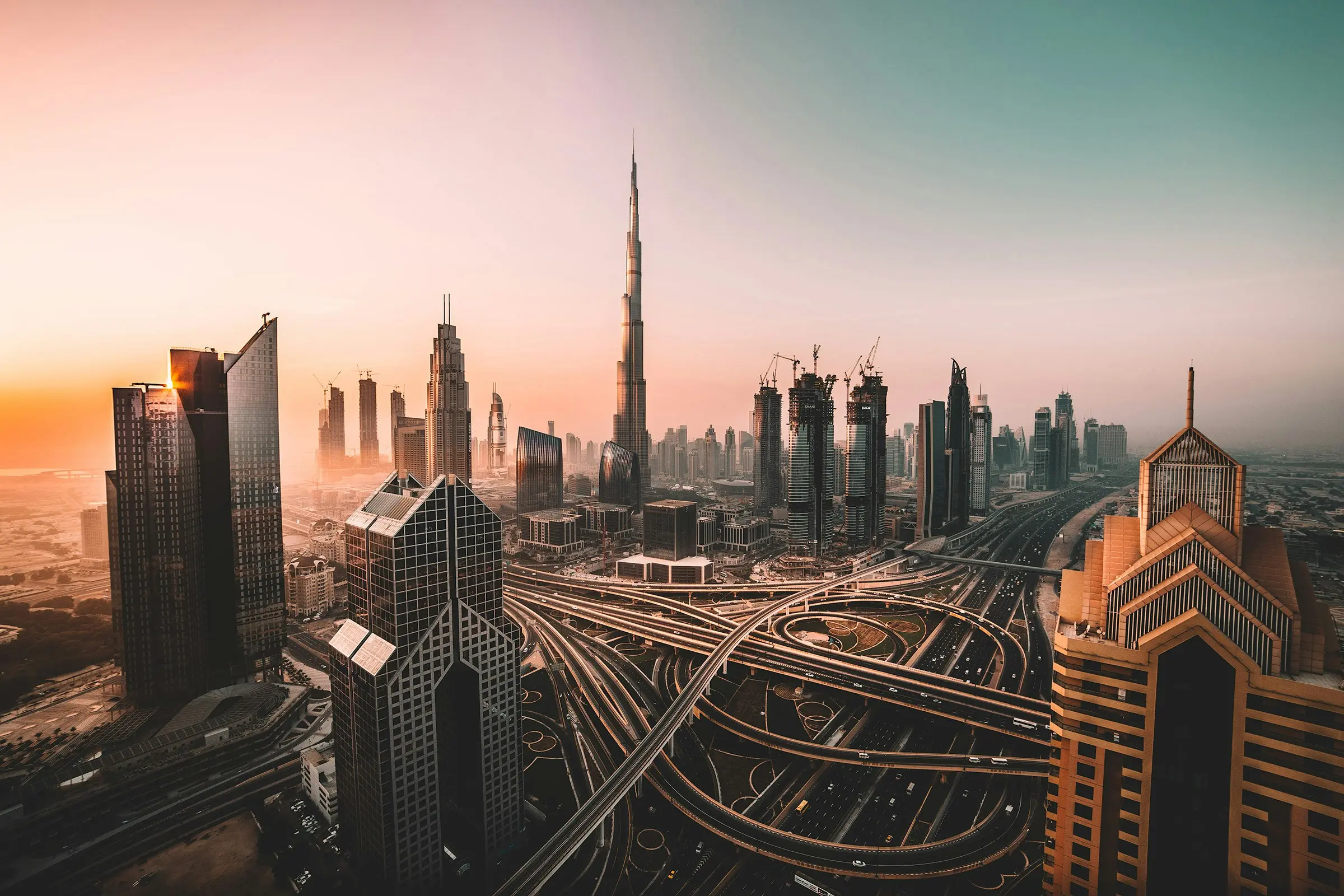

IAH Project Development
## IAH Project Development — Innovative Architecture and Heritage in Dubai > **TL;DR Snapshot** > | Factor | Detail | > |--------|--------| > | Developer Type | Architecture-led boutique residential developer | > | Acronym Meaning | IAH — Innovative Architecture and Heritage | > | Primary Locations | Al Barsha, Dubai Hills, JVC, Mirdif | > | Design Philosophy | Balancing architectural innovation with respect for cultural heritage | > | Target Buyer | Design-conscious families, UAE nationals, cultured professionals | > | Price Range | AED 600K–4M | > | Typical ROI | 7.5–9.5% gross yield | **IAH Project Development** takes its three initials as a design manifesto: **I**nnovative **A**rchitecture and **H**eritage — the conviction that the most enduring buildings are those that honour the past while reaching toward the future. In a real estate market often characterised by either generic contemporary glass towers or superficial historical pastiche, IAH builds in the space between — genuinely contemporary buildings that acknowledge and engage with cultural heritage without mimicking it. The IAH philosophy is grounded in the belief that Dubai's rapid development has created an architectural amnesia — a city that builds fast and forgets quickly, producing environments that have no memory and therefore no roots. IAH believes that buildings with heritage intelligence — that acknowledge the climate, culture, and community context of the Gulf — create more genuinely liveable environments than their amnesiac alternatives. --- ### The Heritage-Innovation Balance **Why Heritage Matters in Contemporary Architecture:** Heritage is not nostalgia. The best architects of the past three centuries have engaged with cultural heritage not to copy it but to learn from it — to understand why traditional buildings in specific climates and cultures succeeded, and to apply those principles in contemporary form. **Gulf Heritage Principles IAH Applies:** - **Thermal mass:** Traditional Gulf buildings used thick walls and limited openings to manage extreme heat. IAH applies this principle through insulated masonry walls and carefully controlled window-to-wall ratios - **Shade architecture:** The covered walkways, verandas, and projecting upper floors of traditional Gulf buildings create shade that makes outdoor space usable. IAH designs shaded outdoor areas in all projects - **Courtyard microclimate:** The enclosed courtyard's cooling effect is well-documented. IAH incorporates courtyard gardens in all low-rise projects and courtyard-equivalent central atria in towers - **Wind orientation:** Traditional Gulf buildings are oriented to capture prevailing north-west breezes (the shamal). IAH's building orientations always account for prevailing wind direction - **Cultural privacy:** The screening of private family life from public view — through high walls, screened windows, and graduated entry sequences — reflects genuine cultural values. IAH designs privacy into buildings from the planning stage **Where Innovation Enters:** IAH's "Innovative" element is expressed through: - Contemporary materials applied to heritage spatial strategies - Digital fabrication enabling geometric complexity impossible in handcraft - Modern MEP systems integrated with passive climate management - Open-plan living adapted for contemporary lifestyles within heritage spatial logic --- ### Project Portfolio: Heritage and Innovation in Practice **IAH Al Barsha Residences — Al Barsha** Al Barsha's mature suburban character — tree-lined streets, established community infrastructure, proximity to Mall of the Emirates — provides the context for IAH's most heritage-integrated project. *Heritage Element: The Courtyard Villa Apartment* Al Barsha Residences is a low-rise (5-floor) apartment building designed around a central courtyard that references the traditional compound structure of Gulf residential architecture. The courtyard is planted with indigenous Gulf plant species — ghaf trees (UAE's national tree), sidr trees, and date palms — creating an authentic botanical environment. *Innovation Element:* The building's façade uses a parametric CNC-cut screen of extruded aluminium in a geometric pattern derived from traditional Arab tile design but generated algorithmically — creating a pattern of enormous complexity that could not have been designed by hand but whose origins are unmistakably traditional. *Units:* 1, 2, and 3-bedroom apartments. Ground-floor units have direct access to the courtyard garden. **IAH Heritage Hills — Dubai Hills Extension** IAH's most ambitious project: a mixed villa and apartment community in a Dubai Hills-adjacent plot, designed around heritage principles applied to the contemporary master community format. *The Heritage Hills Concept:* Instead of the conventional master community's uniform villa typology, IAH's Heritage Hills offers a variety of housing types within a single community — reflecting the natural variety of a neighbourhood that has evolved over time rather than been developed at once: - Traditional Emirati courtyard houses (6 units) — for UAE national buyers - Contemporary Arabic villas (12 units) — for GCC family buyers - Mid-century modern apartments (48 units) — for international professional buyers - Heritage-influenced townhouses (24 units) — a synthesis of all traditions *The Shared Heritage:* All four typologies share a common landscape — the Heritage Garden, designed as an educational botanical garden documenting the plants traditionally cultivated in the UAE, with labels, cultural history, and culinary uses described in Arabic and English. **IAH Mirdif Community — Mirdif** Mirdif is one of Dubai's most established and genuinely community-oriented residential districts — a neighbourhood that has developed organically over decades and retains the character of a real neighbourhood rather than a planned master community. IAH's Mirdif project respects this existing character. *Character Preservation:* Rather than building a tower that would visually dominate Mirdif's low-rise character, IAH has designed a cluster of 3-story walk-up apartments — no lift, no podium parking (ground-floor private parking), no amenity podium. A genuine residential building in the neighbourhood tradition. *Heritage Integration:* Mirdif's established Arabic character is honoured through: - Building setbacks matching the existing street line - Mashrabiya screens matching the scale and proportion of traditional screens in the area - Landscaping with mature trees that provide immediate shade - Entrance gates with traditional metalwork detailing --- ### Location Intelligence: Heritage Addresses **Al Barsha — Established Premium:** | Destination | Drive Time | |-------------|-----------| | Mall of the Emirates | 5 min | | Dubai Metro (Al Barsha) | 8 min walk | | Al Barsha Park | 5 min walk | | GEMS World Academy | 8 min | | Dubai Internet City | 10 min | **Dubai Hills — Family Premium:** | Amenity | Distance | |---------|---------| | Dubai Hills Mall | 5 min drive | | Mediclinic Parkview | 10 min drive | | GEMS Wellington | 8 min drive | | Dubai Hills Golf Course | 3 min drive | | DIFC | 22 min drive | --- ### Investment Returns: Heritage Enhances Value **The Heritage Premium in Property Values:** Research across global real estate markets consistently shows that properties with distinctive architectural identity — particularly those rooted in genuine cultural heritage — command: - 10–18% capital value premium over comparable generic developments - Higher tenant retention (culturally-resonant environments reduce the desire to move) - Stronger resale liquidity (distinctive properties are easier to market) - More durable value preservation through market cycles **IAH Performance Data:** | Development | Unit | Gross Yield | 3-Year Appreciation | |-------------|------|-------------|---------------------| | IAH Al Barsha Residences | 2-bed | 8.2% | +27% | | IAH Heritage Hills (Townhouse) | 3-bed | 7.5% | +31% | | IAH Mirdif Community | 2-bed | 8.8% | +24% | --- ### Heritage Research Programme IAH Project Development funds an annual **Heritage Architecture Research Programme** — a collaboration with a UAE university architecture department to document, analyse, and communicate the principles of traditional Gulf architecture. **Programme Outputs:** - Annual publication: "IAH Heritage Atlas" documenting traditional UAE buildings - Design workshop for architecture students applying heritage principles in contemporary contexts - Community events at IAH developments featuring heritage architecture storytelling - Digital resource library available to IAH buyers documenting the heritage principles applied in their buildings This programme is not merely CSR — it is product development research that continuously improves IAH's design quality and deepens the heritage intelligence applied to each project. --- ### Sustainability: Heritage as Sustainability IAH's most distinctive sustainability message: traditional Gulf architecture was inherently sustainable — designed for zero-energy or minimum-energy operation through passive strategies. By applying heritage principles, IAH achieves sustainability outcomes that conventional modern architecture struggles to match: **Heritage Sustainability Performance:** | Strategy | Energy Saving vs. Standard | |---------|---------------------------| | Courtyard cooling | -8% total cooling load | | Thermal mass walls | -12% peak cooling demand | | Shade architecture | -15% solar gain | | Wind orientation | -5% mechanical ventilation requirement | | Total heritage advantage | Up to -40% cooling energy | Combined with modern active systems (solar panels, high-efficiency HVAC, BMS), IAH buildings achieve LEED Gold performance while reducing reliance on active systems. --- ### Frequently Asked Questions **Q: Does IAH's heritage architecture mean historically-styled buildings?** A: No. IAH's buildings are unmistakably contemporary in their materials and construction. Heritage principles are applied to the underlying spatial and climatic strategy, not to the visual style. The result is contemporary buildings with genuine cultural intelligence, not historical reproductions. **Q: Who is the typical IAH buyer?** A: Buyers who care about the quality of their environment and have the sophistication to recognise genuine architectural intelligence. This includes UAE nationals who appreciate Emirati design heritage, international buyers with cultural affinity for the Gulf, and anyone who has tired of the generic glass-box apartment and wants something with genuine character. **Q: How does IAH balance heritage and innovation in practice?** A: Through the design brief for each project — the heritage principles (passive cooling, courtyard orientation, shade architecture, cultural privacy) are established as design requirements, and the architect is given creative freedom to express them in a contemporary way. The result is buildings that are novel in appearance but familiar in spatial experience. **Q: What happens to the Heritage Research Programme if IAH is sold or restructures?** A: The Heritage Research Programme is established as a 10-year commitment through a partnership with the university. It is funded through an endowment rather than annual company budget, providing protection against corporate changes. IAH Project Development builds for the future by remembering the past — creating homes that honour the intelligence of generations of Gulf builders who learned through necessity and refined through tradition. In a city that sometimes forgets it has a heritage, IAH remembers — and builds accordingly.

Frequently Asked Questions About IAH Project Development
Everything you need to know about investing with IAH Project Development.
Want Personalized Recommendations?
Let our Sophia AI analyze IAH Project Development's portfolio and recommend the perfect project based on your investment goals and preferences.